

What Is My Picasso Ceramic Worth? The Factors That Determine Value
What sets the value of a Picasso Madoura ceramic: the design, edition size, condition and venue, measured across more than 9,000 public auction results.
Prepared by Artemis Collection. Market figures are drawn from public auction records as described in the methodology note; they are not appraisals.
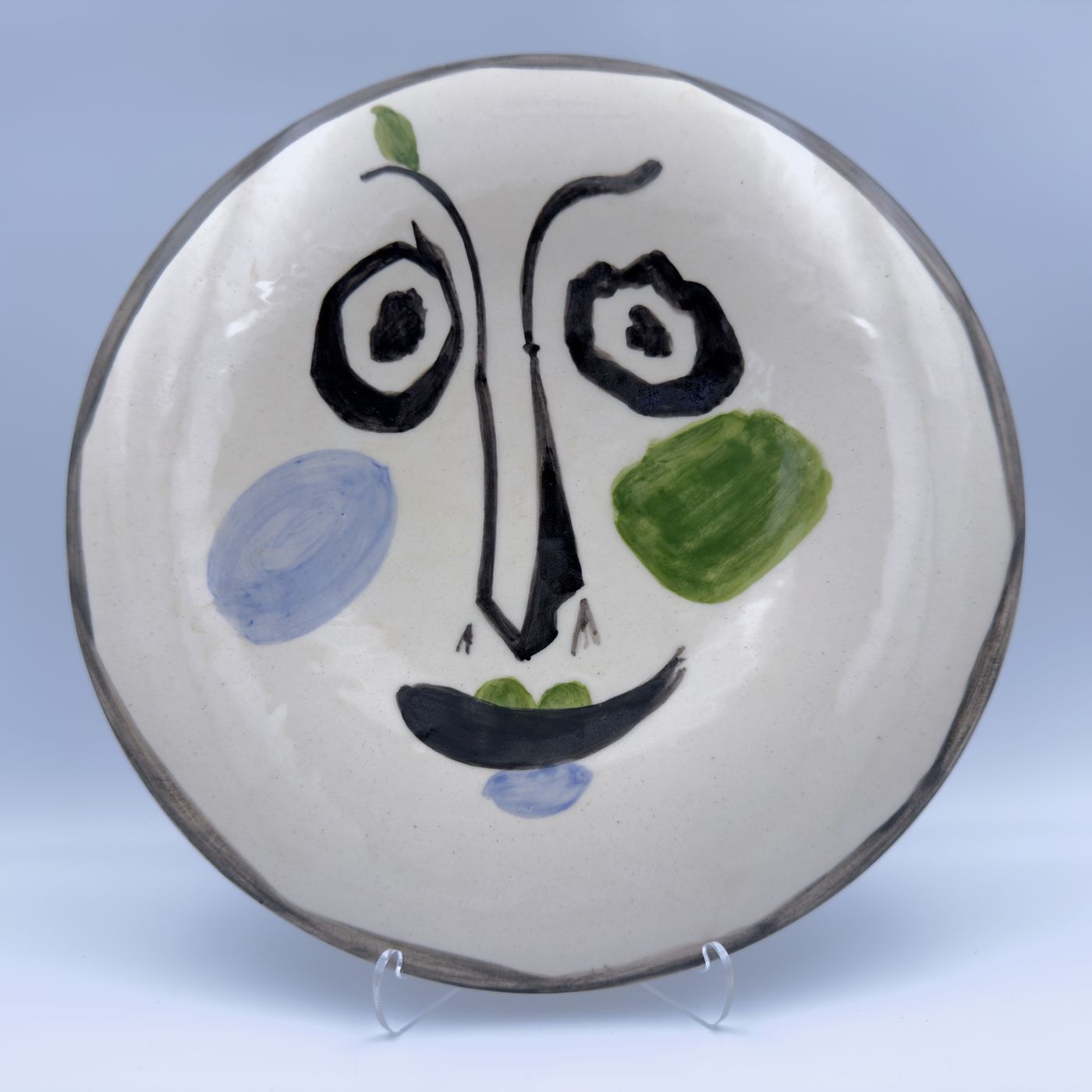
The value of a Picasso Madoura ceramic is set mainly by which design it is, and only secondarily by edition size, form, condition and where it is sold. Across more than 9,000 public auction results since 1986, the median price at the fall of the hammer was about $7,000. That figure is almost useless on its own. Median prices for individual designs run from under $2,000 to over $100,000, and even within a single year the dearer quarter of a design's sales typically sells for about 1.5 times the cheaper quarter.
The figures below come from public auction records we have compiled and checked against the catalogue raisonné. They describe what has happened at auction. They are not a valuation of any particular piece.
Start with the design, not the category
Every Madoura edition has a number in Alain Ramié's catalogue raisonné, the "A.R. number", and that number is the single most useful thing to know about your piece (see how to identify a Madoura ceramic and how to read a Ramié catalogue entry). Pieces are often described by form, as in "a Picasso plate" or "a Picasso pitcher". Form tells you very little about price:
| Form (Ramié), sales 2015–2026 | Lots | Median hammer |
|---|---|---|
| Turned vase | 766 | $17,600 |
| Rectangular dish | 560 | $10,200 |
| Turned pitcher | 1,470 | $8,500 |
| Round plate | 669 | $7,000 |
| Tile | 115 | $3,000 |
| Turned round ashtray | 265 | $2,100 |
Within each form, the spread between designs is far larger than the spread between forms. Take two turned pitchers, both made in editions of 500. Since 2015, Bearded man's wife (A.R. 193) has a median of about $38,000 across 51 public sales. Fish subject (A.R. 139) has a median of about $6,900 across 78. Same form, same edition size, more than five times the price. Among designs with at least ten public sales since 2015, the median price per design ranges from about $1,700 to more than $190,000. The middle 80% of designs fall between roughly $3,800 and $23,800.
The practical point: comparable sales only mean something when they are sales of the same A.R. number. "Picasso plates sell for $5,000 to $10,000" is not a useful statement about any particular plate.
Edition size: the extremes matter, the middle does not
Ramié records an edition size for nearly every design, from 25 copies to 500. Grouping public results by edition size gives a clear shape:
| Edition size (copies) | Lots | Median hammer | Designs (≥3 sales) | Median of design medians |
|---|---|---|---|---|
| 25–50 | 557 | $16,800 | 59 | $16,000 |
| 51–100 | 2,099 | $8,000 | 187 | $6,900 |
| 101–150 | 550 | $7,000 | 40 | $6,500 |
| 151–200 | 1,237 | $8,100 | 59 | $8,000 |
| 201–300 | 1,074 | $7,300 | 41 | $7,400 |
| 301–450 | 989 | $8,000 | 29 | $6,500 |
| 451–500 | 2,962 | $4,800 | 72 | $4,100 |
The smallest editions carry a clear premium and the largest editions a discount. Between roughly 50 and 450 copies, the edition size makes little systematic difference. Small editions are also disproportionately vases and pitchers, so part of their premium is a form effect. Some 500-copy designs, A.R. 193 among them, sell for far more than most 50-copy designs. Our article on whether edition size determines value repeats the comparison with form, size and subject held equal.
What about the stamp class? Ramié classifies each design by technique: authentic replica (A.R.), original print (O.P., stamped "Empreinte originale de Picasso") or original stamp (O.S.). It is sometimes said that the "Empreinte originale" pieces are the more valuable class. The public record does not support that as a rule:
- Authentic-replica designs: 5,922 sales, median about $7,500.
- Original-print designs: 3,269 sales, median about $6,500.
- Original-stamp designs: 105 sales, median about $2,200. These are all small tiles and plaques.
The differences reflect which designs fall in each class. They do not show that one technique is worth more than another. No class carries a premium once designs are compared like for like: original-print designs sell at about the level of authentic-replica designs of the same form and size, and somewhat lower when edition size is also held equal (our guide to originals, editions and reproductions sets out the comparison). Judge your piece by its own design's record, not by its stamp.
Even the same design varies widely
The point owners most often underestimate is how much prices vary for a single design. We took the 111 designs with at least 20 public sales since 2015 (3,814 sales in all) and compared each sale with its own design's median:
- About half of sales landed within 25% of the design's median.
- About four in five landed within 50% of it.
- One sale in six reached 1.5 times the median or more. One in eight fell to two-thirds of it or less.
- For a typical design, the dearer quarter of sales sold for at least 1.6 times the cheaper quarter.
- The same spread appears within a single year: about 1.5 times for designs with six or more sales in the year.
Where that spread comes from (the year, the house, the particular sale) is the subject of the same Picasso ceramic, two different prices.
Some of this spread comes from the object: condition, the quality of the glaze and painting, and how crisp the impression is. Some comes from the sale: the house, the date, and who happened to be bidding. A single past result is one draw from that distribution. Even a strong set of comparables gives a range, not a price.
Condition and restoration
Condition reports are rarely published in machine-readable form, so the public record says less about condition than about anything else. One US house, Rago, does record a short condition note with its lots. In a small Rago sample, lots whose note recorded a chip, crack or restoration (8 lots) sold lower against the same design's sales elsewhere than lots described as excellent or with only minor flecks or wear (64 lots). The sample is too small to put a number on the discount, and the size of the effect depends on the damage and the design. Our article on damage, restoration and condition gives the detail.
What we can say from handling pieces: a hairline or chip on the reverse rim is a different matter from a crack through the image, and a professional restoration declared in the catalogue is a different matter from undisclosed overpaint. Do not clean, regild or repair a piece before asking for advice. A clumsy repair can cost more than the damage it hides.
Provenance and documentation
Madoura editions were produced in numbers, so provenance rarely transforms the price of an ordinary example the way it can for a unique work. It still matters in two ways:
- It supports the attribution. A purchase receipt from the period, a gallery label or an earlier auction record makes a house or a buyer more comfortable. That can decide whether a piece is accepted for a better sale at all.
- It occasionally adds a premium. This happens when the history is notable, for example a piece that came directly from a well-known collection.
Keep every paper you have, including ordinary receipts. Which provenance documents matter explains how they are weighed.
Where it is sold
The same design does not fetch the same hammer price everywhere. For 306 designs that sold at least three times at Christie's and at least three times elsewhere since 2015, we compared the median hammer at Christie's with the median elsewhere. The Christie's median was typically about 1.3 times higher; the middle half of designs fell between 1.1 and 1.6. The figure depends heavily on which other house is in the comparison:
| Compared with Christie's | Designs | Christie's median ÷ other house's median |
|---|---|---|
| Sotheby's | 127 | 1.10 |
| Rago (≥2 sales each side) | 48 | 1.32 |
| Phillips | 28 | 1.56 |
| Doyle | 38 | 1.63 |
These ratios describe where prices have been higher. They do not prove that consigning to Christie's would raise a given piece by a third. The houses that lead this market also select the better examples and run dedicated Picasso ceramics sales, and they may decline ordinary examples. The ratios also compare hammer prices. Commissions and costs differ by house and by agreement, so the net proceeds can differ more, or less, than the hammer (see the real cost of selling at auction). Our comparison of which auction houses get the strongest prices measures the same gap lot by lot, against the design's sales at other houses within two years, and arrives at about 1.4; that measure gives more weight to the designs Christie's sells most often.
Estimate, hammer, price realised, proceeds
Four different numbers get called "the price":
- Estimate. The house's published low–high range before the sale. It is a marketing judgement as much as a valuation. At Christie's, about 71% of Madoura lots sold since 2020 hammered above the high estimate; the median hammer was about 1.5 times the midpoint of the estimate. At Doyle, Phillips and Piasa, the median lot hammered close to the midpoint (about 1.0–1.1 times). An estimate is evidence of how a house chose to pitch a sale, not of what a piece is worth. Our guide to reading an auction listing compares the houses in more detail.
- Hammer price. The final bid. This is the figure the seller's commission is calculated on.
- Price realised (or "sold for"). The hammer plus the buyer's premium. For lots of this size the premium is now 28–30% of the hammer at Christie's, Sotheby's, Bonhams and Rago/Wright, and since 2023 has ranged from about 25% to 31% across the houses in our data; it was lower in earlier decades. This is the figure houses publish in their results, so it is the figure you will find online.
- Net proceeds. What the seller receives: the hammer, less the seller's commission and any agreed charges.
A published result of $10,000 therefore means a hammer of roughly $7,700–7,800, and the consignor received less again. When you compare a past result with an offer, compare like with like.
Finding comparables yourself
- Confirm the A.R. number from the catalogue or a reliable lot description.
- Search auction results for that number, by its French or English title, across several houses. Note the date, the house, the price, and whether that price includes the buyer's premium.
- Read each lot description. Edition number, condition and any restoration explain many outliers.
- Look at the range, and the most recent few results, rather than the single highest one.
- Be wary of thin evidence. About 50 of the 633 catalogued designs have no sold result in our cleaned dataset, and many more have only a handful. With two or three results, the range is more honest than any average. Our article on valuing a rare design with few sales tests what works when the record is thin.
Our guide to choosing comparable sales tests which of these choices predict a result best.
Year-by-year medians move around, but after allowing for which designs happened to sell, we find no sustained trend since 2015. We make no forecast of future prices.
How these figures were calculated
Dataset. Public auction results for Picasso Madoura ceramics that carry an A.R. (Ramié) number, compiled by Artemis Collection from auction-house results pages and result aggregators. The results run from 14 May 1986 to 29 October 2026, and we use sold lots only.
Cleaning. - Where a sale appeared both at the house and on an aggregator, we removed the aggregator copy. - We excluded lots described as "style of", "after" a different maker, replicas or Italian pottery. - We dropped results under $300 hammer as a data-quality floor. - We dropped multi-object lots and same-source duplicates. - About 9,200–9,900 lots across about 580 designs remain, depending on the data snapshot and how strictly multi-object lots are excluded; other articles in this section state the run they use. All figures above come from the 9,511-lot run, except the stamp-class figures, which use the stricter 9,296-lot run described in our guide to originals and editions. Lots identified as sold by Artemis Collection itself are excluded.
Hammer prices. Most houses publish premium-inclusive prices. We derive hammer as the published price divided by one plus a standard buyer's-premium rate for each house (26.5% for Christie's and Sotheby's). Actual premiums were lower before about 2008 and around 25% in many years since, so derived hammers for older results are somewhat understated; for sales since 2015 the effect is about 1–2%. For Rago and LiveAuctioneers, the hammer is reported directly. Prices are in US dollars, converted from other currencies by our data pipeline, and are not adjusted for inflation.
Groupings. - Form, edition size and technique class come from our transcription of Ramié's catalogue. - Venue ratios compare medians for the same design, with sales from 2015 onward. - Estimate comparisons use sold lots that carry a published estimate, in the sale currency. Unsold lots are largely missing from public records, so these figures describe what sold, not the odds of selling.
Figures are rounded. They describe historical public results and are not a valuation of any object.
Sources
- Ramié, Alain. Picasso: Catalogue of the Edited Ceramic Works 1947–1971. Vallauris: Galerie Madoura, 1988. Design identity, form, edition size and technique for each A.R. number.
- Public auction records of Picasso Madoura ceramics, 1986–2026, compiled by Artemis Collection. Results published by the auction houses named in the text; see 'How these figures were calculated'.
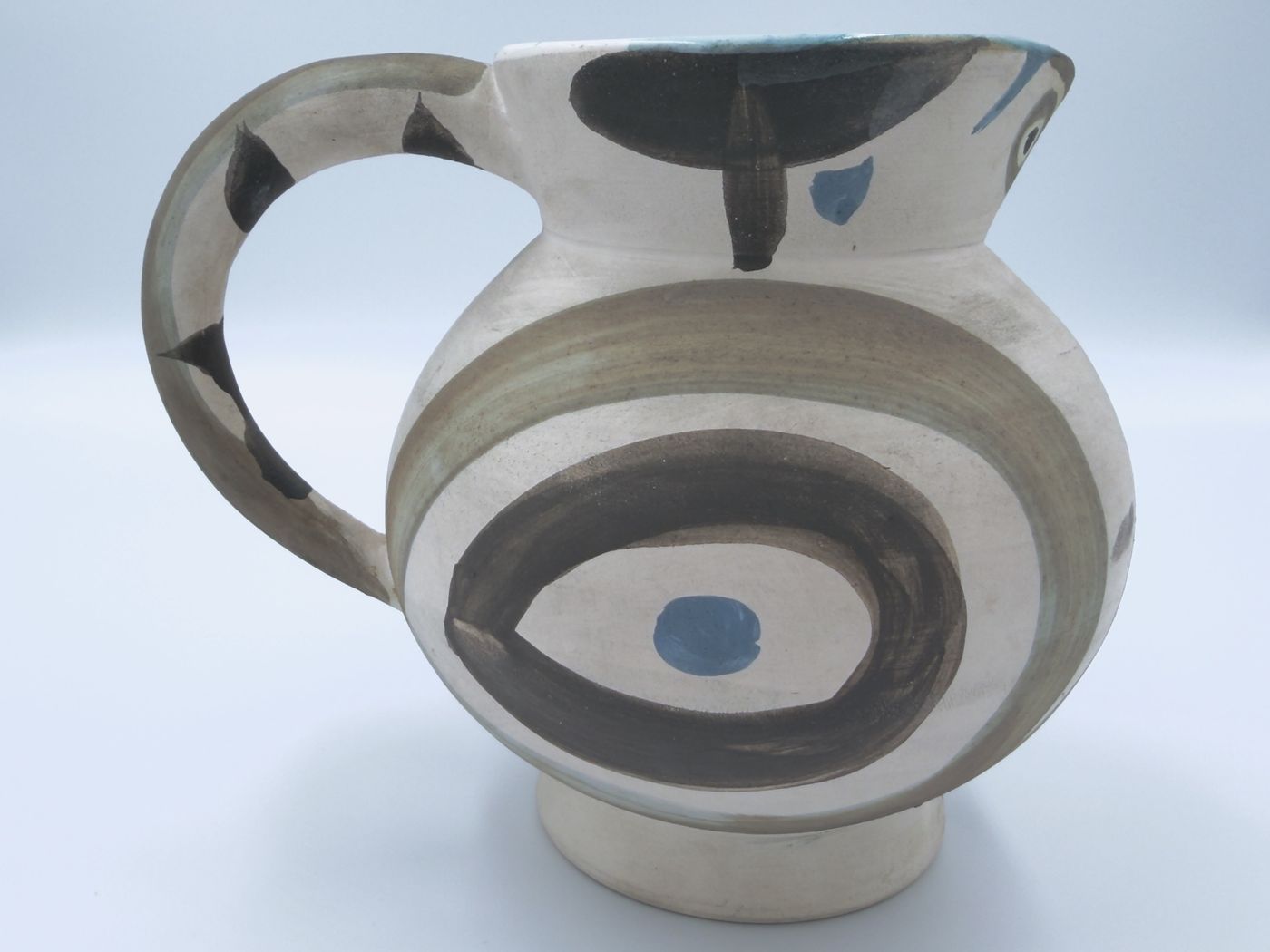
A practical checklist for photographing and documenting a Picasso Madoura ceramic: the views, marks, measurements, condition and papers a specialist needs.
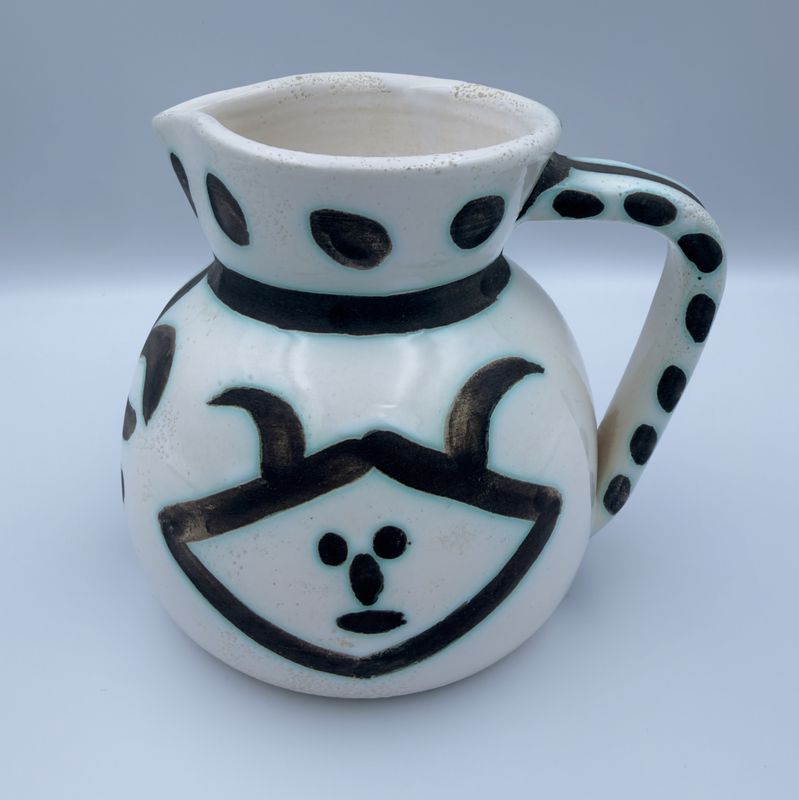
Which past auction results predict a Madoura ceramic's price best? We tested nine ways of choosing comparables on 5,000+ public sales.

Size is the strongest catalogue predictor of Madoura prices: what extra centimetres add within each form, and where size stops adding value.