

Picasso Ceramics: Originals, Editions and Reproductions
Unique Picasso ceramics, authorised Madoura editions and later reproductions: what each term means, how marks map to them, and what prices show.
Prepared by Artemis Collection. Market figures are drawn from public auction records as described in the methodology note; they are not appraisals.
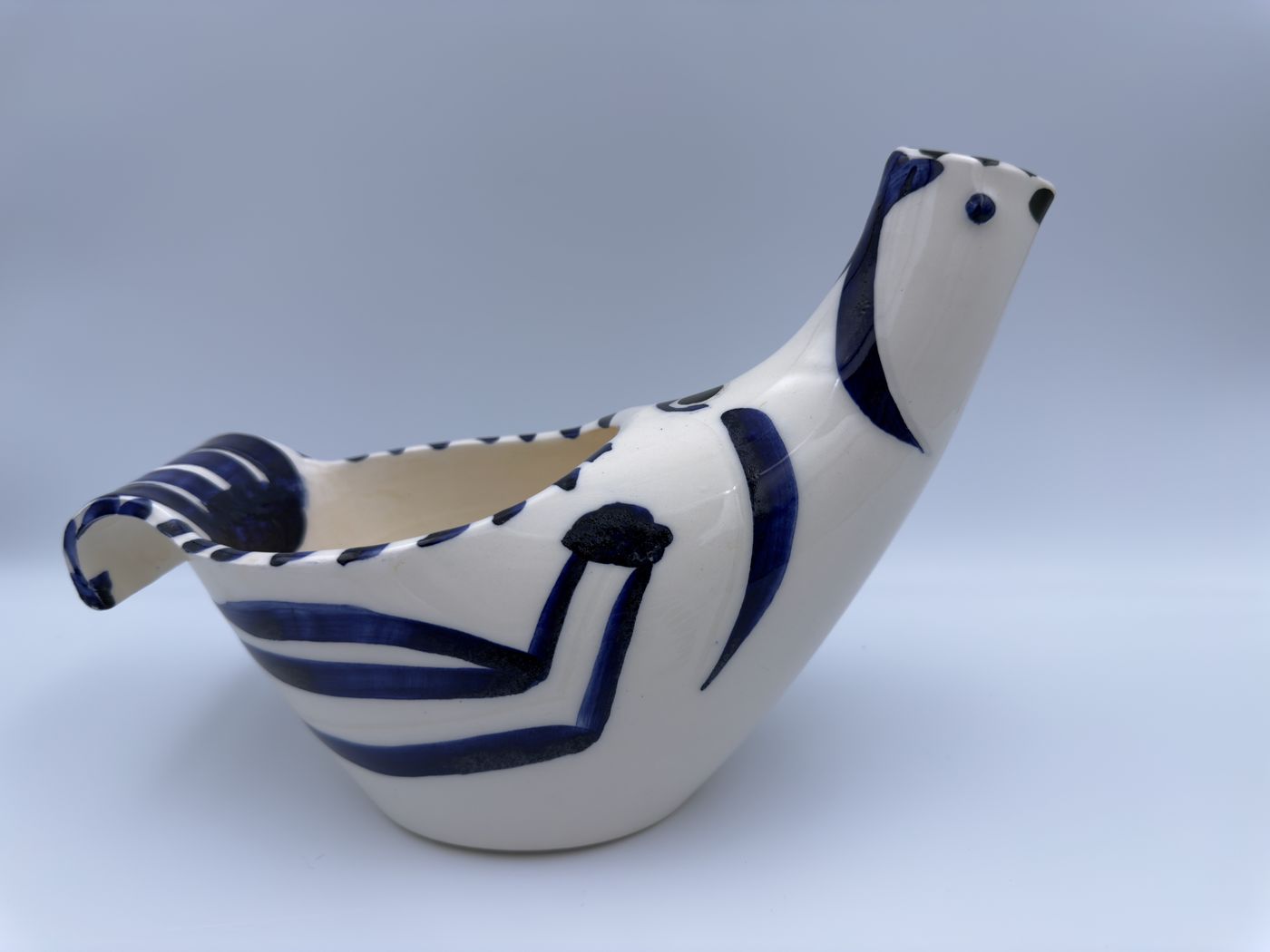
Picasso's ceramics fall into three groups that owners often mix up.
- Unique works are pieces Picasso made or decorated himself at the Madoura pottery in Vallauris. The Musée Magnelli in Vallauris estimates there are between 3,500 and 4,000 of them.
- Madoura editions are the 633 designs, created by Picasso between 1947 and 1971, that he authorised the pottery to produce in limited numbers. Alain Ramié catalogued them in 1988. They are authentic Picasso works in the sense the market uses. They are not unique: the copies were made by Madoura's craftsmen from his originals or matrices, not by Picasso himself.
- Reproductions and look-alikes are everything else: later copies, decorative pottery "in the style of" Picasso, and objects marked to imitate the editions.
Within the editions the catalogue distinguishes three methods of production, each with its own mark. None of the three is a reproduction in the dismissive sense, and, on our measurement of public auction results, none consistently sells for more than the others once you compare like with like.
Unique works
A unique ceramic is one that Picasso himself made or decorated. It may be signed, dated or dedicated, and it carries the provenance of a work of art rather than of an edition. Many are in museums. In 2022 the Musée Magnelli opened a permanent room for a deposit of unique pieces dedicated to Suzanne Ramié. Unique works are not in Ramié's catalogue of edited works, and they are not identified by an A.R. number.
The Picasso Administration in Paris describes a committee, the Comité Picasso, that gives opinions on the authenticity of works submitted to it. Its online request form lists ceramics with the qualification "si œuvre unique" (if a unique work). An owner who believes a piece is unique should start there, and should expect the question to be decided on the object and its documents, not on a stamp.
Madoura editions
According to Ramié's preface (pp. 9–10), after an intense period of work Picasso "sought the ability to repeat certain of his works". The pottery adopted two methods to do so, and later added a third:
| Catalogue class | What the catalogue says it is | Typical mark | Designs |
|---|---|---|---|
| A.R., authentic replica | A hand-made repetition of an original, reproducing its volumes and decoration with the materials and methods of the first model | "Edition Picasso", sometimes with "d'après Picasso" | 274 |
| O.P., original print | Clay pressed onto a hardened plaster matrix on which the original subject was engraved | "Empreinte originale de Picasso" | 338 |
| O.S., original stamp | A linoleum block engraved by the artist and pressed into soft clay (1971 only) | "Poinçon original de Picasso" | 21 |
Definitions are from the catalogue (p. 23). The design counts come from our transcription of its 633 entries.
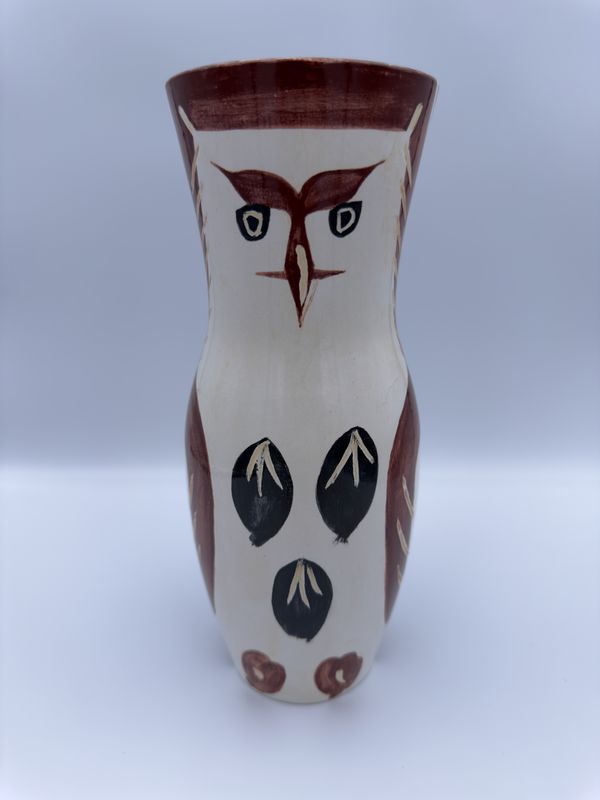
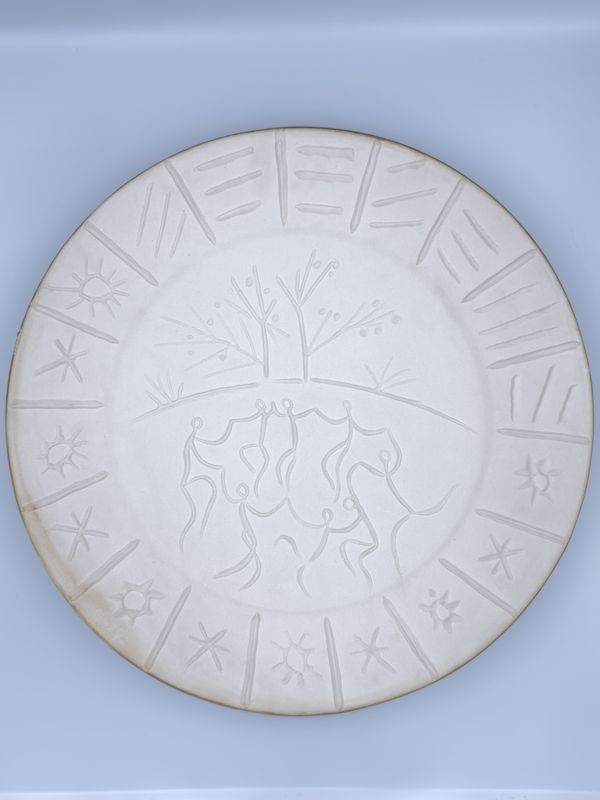
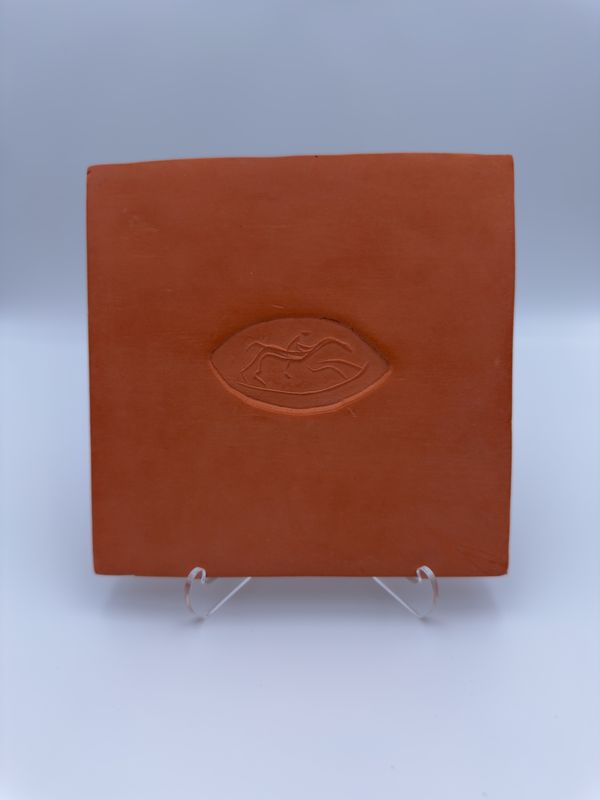
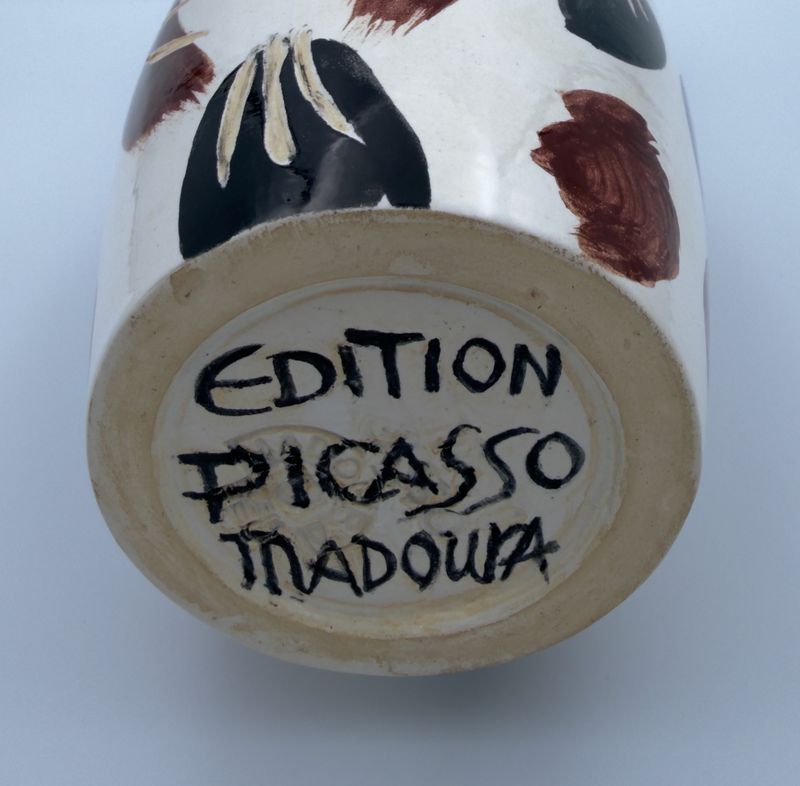
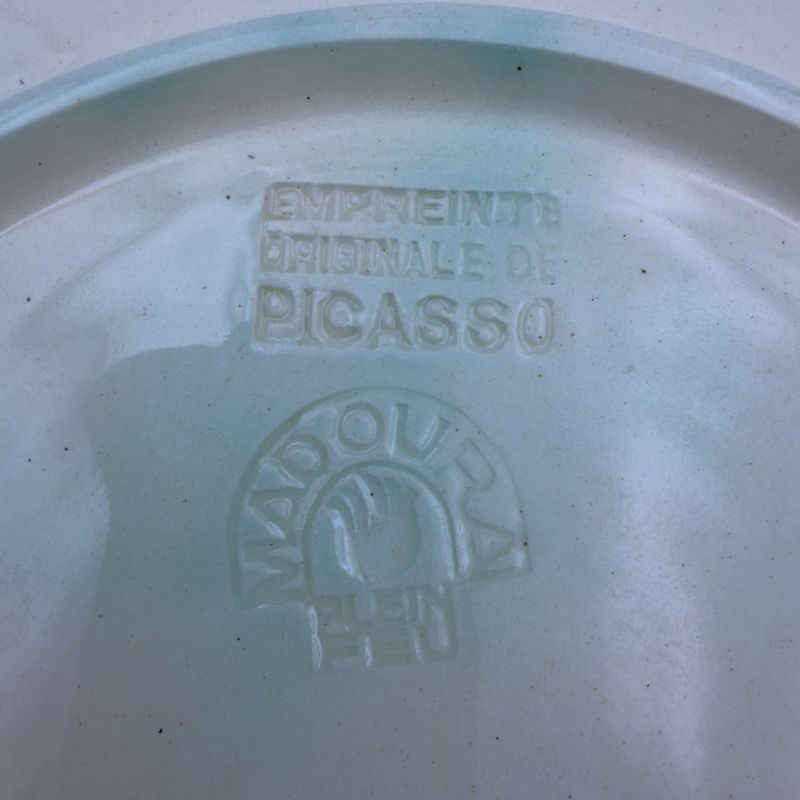
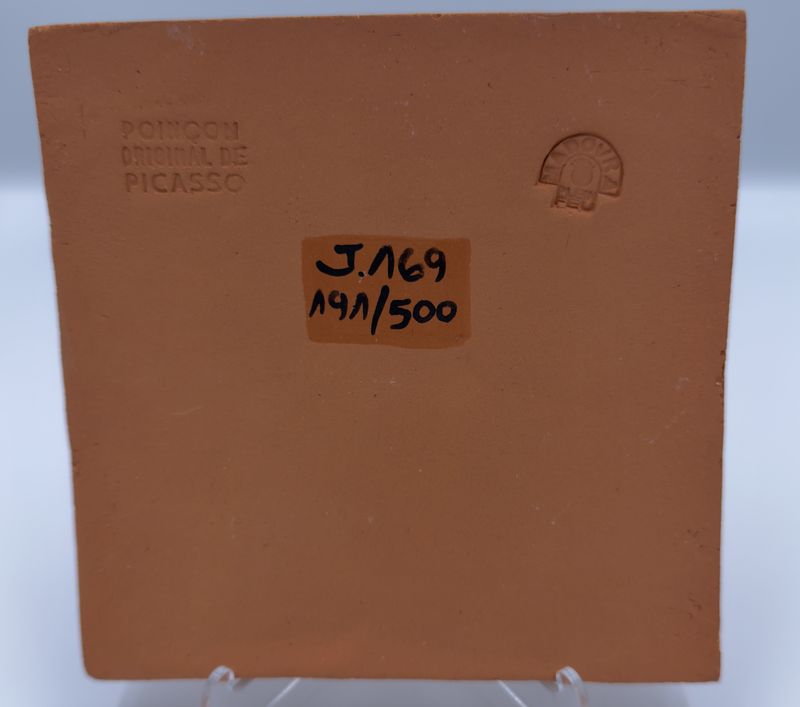
Three documented facts set these editions apart from later copies:
- They were authorised. Marilyn McCully, writing for Sotheby's, describes an agreement under which Madoura would issue editions based on Picasso's models, sold as Picasso editions. The catalogue reproduces a declaration by Picasso dated 9 December 1967 assigning to the Madoura workshops his author's rights in the ceramic editions he had given them (p. 21).
- They were limited and documented. Each design's edition size is recorded in the catalogue, from 25 to 500 copies for most designs. Ramié states that some productions "came to an end due to the limited number of the allowed copies and were withdrawn" (p. 10).
- They were made at Madoura while the pottery was producing. The Musée Magnelli's chronology dates the start of Picasso's ceramic editions to 1949 and the end of production at the Madoura workshop to 1997. The catalogue covers designs created between 1947 and 1971, but Ramié's 1988 preface describes the collections as having been "in constant evolution" for forty years, with some productions withdrawn once the permitted number of copies was reached. That implies some editions were still being produced after Picasso's death in 1973. No source we have found says when the last copies of particular editions were made.
Terminology that causes confusion
- "Edition" does not mean "copy" in the dismissive sense. McCully's essay itself calls the replicas "reproductions based on his models", meaning authorised Madoura repetitions. When you read that word in older literature, check whether it refers to an authorised edition or to an unauthorised later copy.
- "Empreinte originale" does not mean "touched by Picasso". The catalogue's definition is a transfer from a matrix bearing Picasso's engraved subject. The originality lies in the matrix. It is not a claim that Picasso handled each copy. Sources differ on details of the matrix process (see our production guide).
- "Authentic replica" does not mean "fake". It is the catalogue's English name for the hand-made repetitions marked "Edition Picasso".
- "D'après Picasso" ("after Picasso") on a Madoura piece is not an admission that it is a copy. The catalogue's table lists "Madoura / after Picasso / Edition Picasso" as a limited authentic replica (p. 18). Off Madoura, the same phrase, or "after Picasso" in an auction title, usually signals a work that is not by the artist.
How the marks track the categories
Owners usually meet these categories through the stamp on the underside, so we tested whether stamps and catalogue classes actually line up. In 2,771 Christie's and Phillips lot descriptions (1995–2026), designs the catalogue classes as authentic replicas were described with "Edition Picasso" in 94.4% of lots and with "Empreinte originale" in 0.2%. Original-print designs were described with "Empreinte originale" in 97.5% and with "Edition Picasso" in 3.7%. Original-stamp designs were described with "Poinçon original" in 84.8% of 46 lots. The stamp is therefore a reliable label for the class of a genuine piece. It is not evidence that a piece is genuine. Our stamps and marks guide has the full table.
Does one class sell for more?
A common belief is that the "Empreinte originale" pieces are the more valuable class because they are closer to Picasso's hand. Public results do not support that as a general rule.
Raw comparison. Across 9,296 cleaned sold lots (1986–2026):
| Class | Lots | Median hammer |
|---|---|---|
| A.R. (authentic replica) | 5,922 | $7,500 |
| O.P. (original print) | 3,269 | $6,500 |
| O.S. (original stamp) | 105 | $2,185 |
Why the raw comparison misleads. The classes contain different kinds of object. In the catalogue, 109 of the 274 A.R. designs are pitchers, vases or other turned and sculptural forms, against 9 of the 338 O.P. designs. The O.P. class is mostly plates, dishes and wall plaques. The O.S. class is entirely small tiles and plaques. Form and edition size both affect price.
Like-for-like comparison. We took designs with at least three sales between January 2015 and October 2026 (466 designs, 6,900 lots), calculated each design's median, and compared O.P. with A.R. designs of the same broad form and edition-size band:
| Form, edition size | A.R. designs | O.P. designs | O.P. median ÷ A.R. median |
|---|---|---|---|
| Plates, dishes, bowls; 51–100 copies | 21 | 101 | 1.16 |
| Plates, dishes, bowls; 101–200 copies | 52 | 20 | 0.89 |
| Plates, dishes, bowls; 201–300 copies | 8 | 6 | 1.33 |
| Plates, dishes, bowls; 301–450 copies | 9 | 5 | 0.58 |
| Vessels and sculpture; 50 copies or fewer | 12 | 5 | 1.30 |
The ratio moves in both directions, and the strata are small. Within the best-populated comparisons it sits close to 1.
Holding several things equal at once. The strata above control for only two things at a time. In a separate regression on 489 designs with at least three sales (May 2000 to October 2026), each design's price level, after allowing for sale year and auction house, was compared with designs of the same form, catalogue size, edition size, subject group and period. The answer depends on what is held equal. Against A.R. designs of the same form and size, O.P. designs sell at the same level (ratio 0.99; 90% interval 0.89–1.08). Once edition size is also held equal, an O.P. discount of about 18% appears (0.82; 0.72–0.92). That happens because O.P. editions tend to be smaller, and smaller editions usually sell for more, but O.P. designs do not. Our article on edition size and value describes the model.
Our reading: the "Empreinte originale" class carries no premium. Like for like on form and size it sells at about the level of the authentic replicas; on the strictest comparison it sells somewhat lower. The individual design matters far more, and so do form, edition size, condition and the venue. These are observations from public data with the limits described below. They are not a valuation rule.
Reproductions and look-alikes
Outside the catalogue there is a large body of pottery that resembles Picasso's editions:
- Decorative pottery in Picasso's manner, from Vallauris and elsewhere, made by other workshops and sold honestly as such but later misdescribed. Auction titles such as "in the style of", "after" or "Italian" usually mark these. We exclude them from all our price figures.
- Copies of specific edition designs, sometimes with imitation stamps. These cannot be identified from a mark alone. The most useful checks are the catalogue's dimensions, form and colours, the type of clay, the quality of the decoration, and the consistency between the design's class and the marks it carries.
- Prints, posters and books reproducing ceramic designs, which sometimes appear in ceramic searches.
A price far below what the design normally makes in public results is a warning, not a bargain signal, until the object has been examined.
Mistakes that lead owners to overvalue or undervalue
- Assuming an edition is worthless because it is "only a reproduction". Authorised Madoura editions sell regularly at auction. In our data the median design sells in the thousands of dollars at hammer.
- Assuming "Empreinte originale" is always worth more. No comparison we ran shows a premium for the class; see above.
- Assuming a piece outside Ramié is a unique work. It may be unique. It may also be an unrelated Vallauris piece, a variant, or a copy.
- Treating "Madoura" alone as proof of Picasso. The pottery also made its own wares, designed for the most part by Suzanne Ramié, and worked with other artists. The Picasso editions carry the class marks described above as well.
- Expecting a Picasso signature on an edition. Ramié records Picasso's signature as part of the edition for only one design in our transcription (A.R. 236). Some designs reproduce a date or inscription within the decoration itself, as Christie's descriptions note for A.R. 317. That is part of the design, not a hand signature on that copy.
What remains uncertain
- When the final copies of individual editions were produced. Ramié's 1988 preface implies that some editions were still in production after 1973, but no source we have found gives dates for particular editions.
- Exactly how the plaster matrices for the original prints were engraved and by whom. The catalogue's definition and McCully's account differ in emphasis.
- Whether the Picasso Administration's procedure differs for edition ceramics. Its published form refers to unique ceramics.
For how the editions were physically made, see how Madoura editions were produced. For identifying a design, see Alain Ramié catalogue numbers. If you are considering buying a piece, our due-diligence checklist for buyers puts these distinctions into practice.
How these figures were calculated
- Dataset. Sold lots of Picasso Madoura ceramics keyed to a Ramié number in the Artemis Collection research database. Aggregator copies of house results are removed (same design, sale within four days, price within 2%), as are "style of", "after" and Italian-production titles, lots under $300 hammer, multi-object lots and exact duplicates. That leaves 9,296 lots of 583 designs sold between May 1986 and October 2026. (Depending on the data snapshot and how strictly multi-object lots are filtered, the pool holds about 9,200–9,900 sold lots; this article uses the run described here.)
- Hammer. Most houses publish prices that include the buyer's premium. We derive hammer by dividing by one plus a standard buyer's-premium rate for each house (26.5% for Christie's and Sotheby's); actual rates were lower in earlier decades, so older derived hammers are somewhat understated. Rago and LiveAuctioneers report hammer directly. Figures are nominal US dollars, converted at the time of sale and not adjusted for inflation.
- Class, form and size. Taken from our transcription of the Ramié catalogue. "Plates, dishes, bowls" groups the catalogue's dish, plate, cupel and bowl forms. "Vessels and sculpture" groups pitchers, vases, turned pieces and clay sculptures.
- Design-level comparison. For each design with three or more sales since 2015, we take the median hammer, then compare the median of those design medians between classes within each stratum. Strata need at least three designs in each class.
- Regression comparison. A regression of log hammer on design, sale year and auction house gives each design a price index; for the 489 designs with at least three sales (9,231 lots, May 2000 to October 2026), we regressed that index on production class with form family, log catalogue dimension, log edition size, subject group and design period, weighting designs by sales (capped at 25). Intervals are 90% bootstrap intervals over designs. The figures quoted are from the specifications with form and size only, and with all controls.
- Limits. Unsold lots are largely absent, so the figures describe what sold. Christie's accounts for over half the lots. Strata are small and their ratios are unstable.
If you are unsure which category your piece falls into, you are welcome to send photographs of the front, underside and marks to Artemis Collection.
Sources
- Alain Ramié, Picasso: Catalogue of the Edited Ceramic Works 1947–1971 (English edition, Madoura, © Galerie Madoura 1988). Preface pp. 9–10; marks p. 18; Picasso's declaration of 9 December 1967 reproduced p. 21; definitions p. 23. Cited by page; not reproduced.
- Musée Magnelli, musée de la céramique (Vallauris), press release for the Salle Suzanne et Georges Ramié, 2022. Accessed 6 November 2026. Unique works estimated at 3,500–4,000; chronology including editions from 1949 and Madoura's production ending in 1997.
- Marilyn McCully, 'Picasso and the Ramiés in the Valley of Gold', Sotheby's, 29 March 2019. Accessed 6 November 2026. The agreement for Madoura editions; replicas and empreintes originales.
- Picasso Administration, home page (authentication section and request form). Accessed 6 November 2026.
- Public auction records of Picasso Madoura ceramics, 1986–2026. Artemis Collection analysis; method in 'How these figures were calculated'.
Which documents support a Picasso Madoura ceramic's history, what auction houses actually print as provenance, and what papers cannot prove.
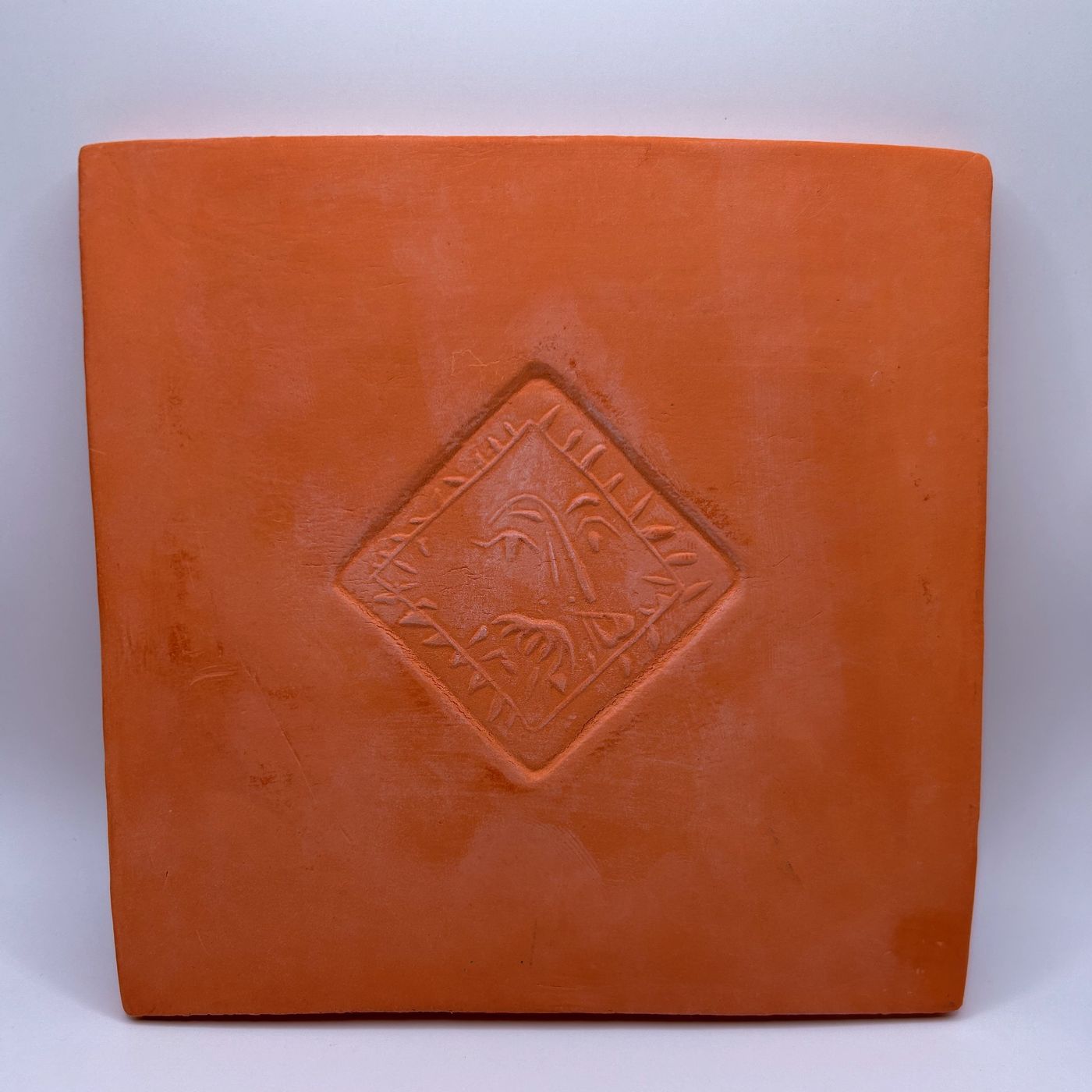
What an A.R. (Alain Ramié) number is, how to read a catalogue entry, and how to use the number to research a Picasso Madoura ceramic.
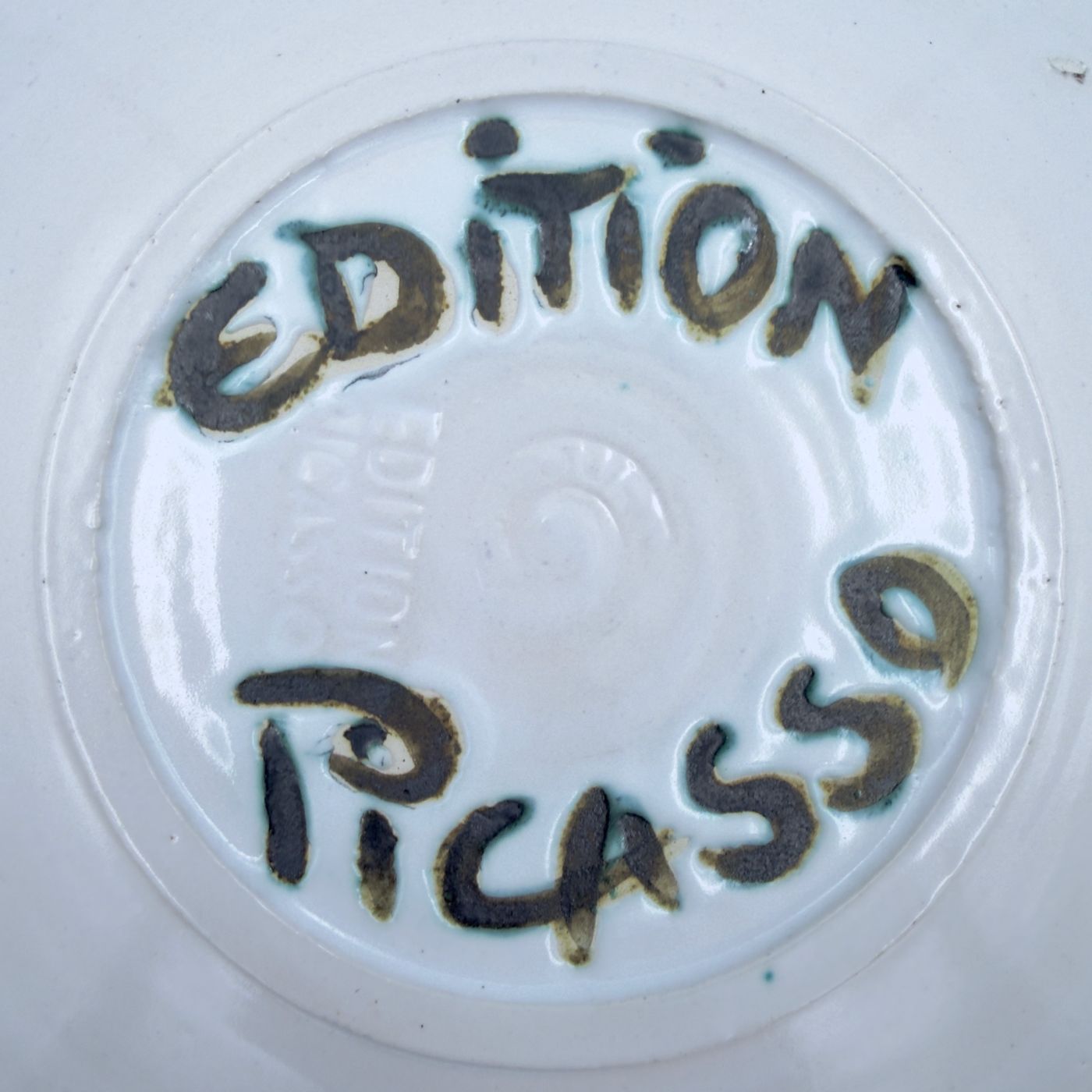
What the stamps on Picasso Madoura ceramics mean: Madoura Plein Feu, Edition Picasso, Empreinte originale, Poinçon original, numbers and codes.