

Buying a Picasso Madoura Ceramic: A Collector's Due Diligence Checklist
A buyer's checklist for Picasso Madoura ceramics: Ramié number, marks, edition, condition, provenance, comparable prices, guarantees and shipping.
Prepared by Artemis Collection. Market figures are drawn from public auction records as described in the methodology note; they are not appraisals.
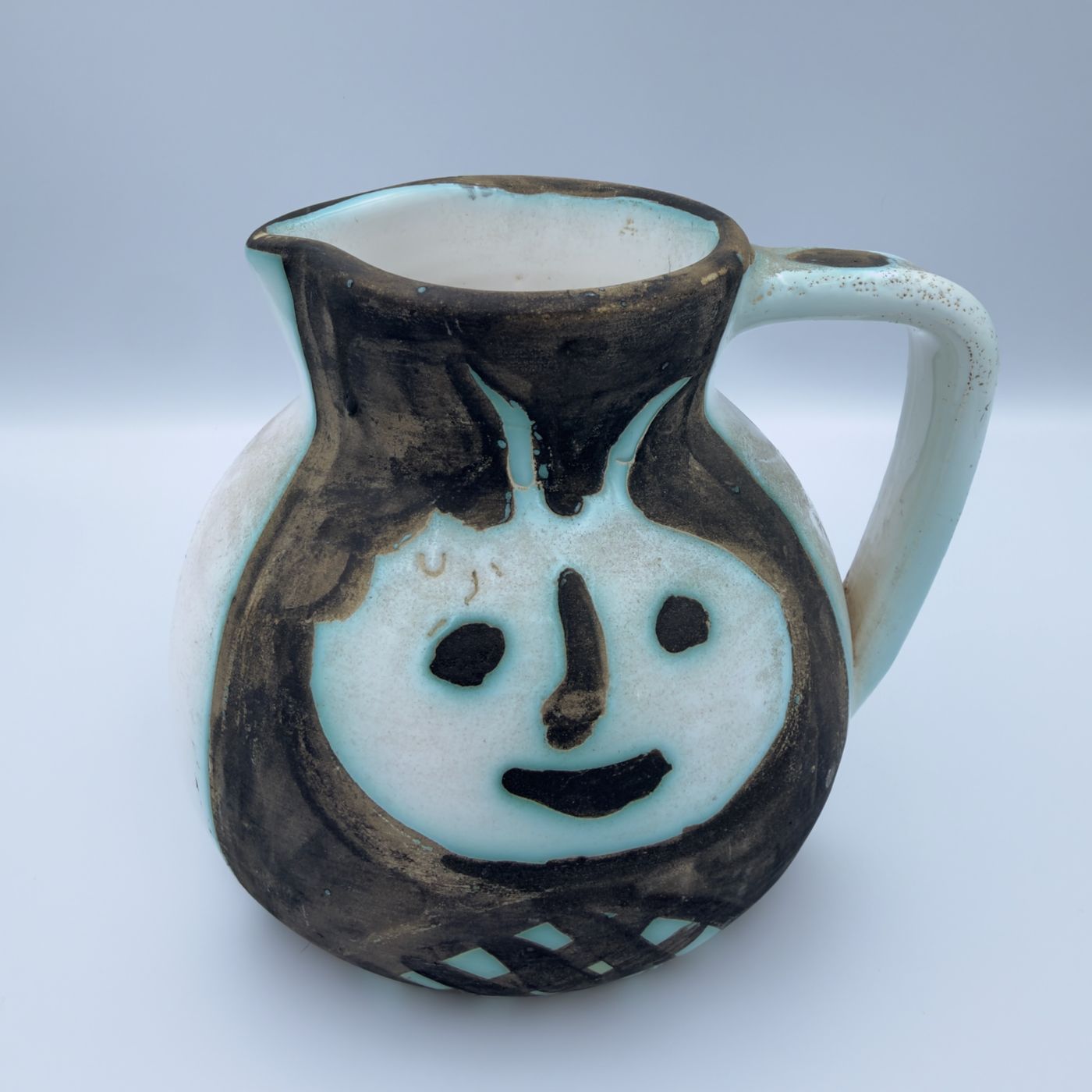
Before buying a Picasso Madoura ceramic, establish six things in writing: which Ramié design it is, whether its marks and edition number are consistent with that design, its condition (including any restoration), what is known of its ownership history, what comparable examples have sold for on the same basis, and what the seller guarantees if a problem emerges later. The checklist below sets out what to ask and what the answer should look like. None of it substitutes for examining the piece or for the judgement of a specialist you trust, and no single mark or document settles authenticity.
Background in one paragraph
From 1946 Picasso worked with Suzanne and Georges Ramié at the Madoura pottery in Vallauris, which made and sold his ceramics; the collaboration lasted about twenty-five years.1 The authorised editions are catalogued by Alain Ramié in Picasso: Catalogue of the Edited Ceramic Works 1947–1971 (Galerie Madoura, 1988; also published in French), whose entry numbers ("A.R." numbers) the market uses to identify designs. Our transcription of the catalogue has 633 entries; edition sizes range from 25 to 500, and a few designs are recorded only as "few copies produced".
The checklist
1. Identify the design
- A.R. number stated by the seller, and checked by you against the catalogue entry: image, title, year, form.
- Dimensions measured and compared with the catalogue. Ask the seller to measure if the listing does not say.
- Edition size for that design noted. Many titles (Visage, Picador, Chouette) cover several different designs; the number, not the title, identifies the piece. See Alain Ramié catalogue numbers.
2. Read the marks
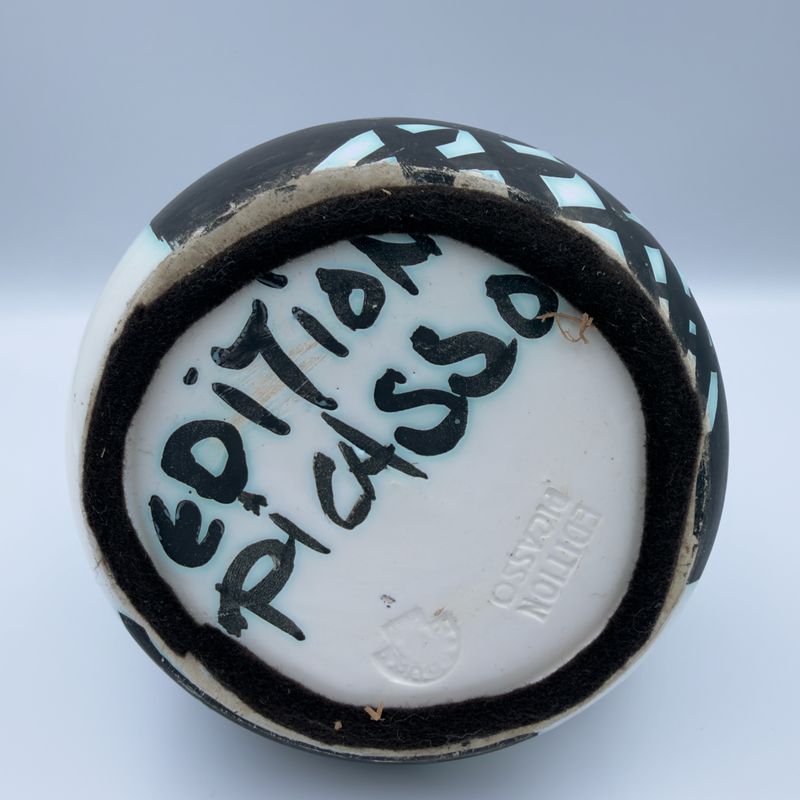
- Clear photographs of the underside, in focus, with every stamp and inscription legible.
- Marks consistent with the design's edition class. In public catalogue descriptions, designs that Ramié lists as empreintes originales are described with "Empreinte originale de Picasso" in 97.5% of cases (945 lots), and authentic-replica designs with "Edition Picasso" in 94% (1,780 lots). Wording such as "D'après Picasso" also occurs on authorised editions.
- Edition number plausible: not higher than the edition size, and not present on a design Ramié records without numbering.
- Remember that stamps can be copied. A correct stamp is necessary, not sufficient. See Madoura stamps and marks.
3. Research authenticity, and know who can and cannot help
- The Comité Picasso (Picasso Administration) examines a request only when the file is complete and is under no obligation to give an opinion; its request form lists ceramics only as unique works ("si œuvre unique").2 Do not expect a certificate for an edition ceramic. If a seller offers a "certificate" with an edition piece, find out who issued it and on what basis.
- Ask what the seller's own guarantee covers, for how long, and what the remedy is (see item 7).
- An image that matches the catalogue photograph shows the design, not the object's authenticity. Copies are made to look like catalogue designs (originals, editions and reproductions explains the difference between authorised editions and later copies).
- Handle the piece, or have someone you trust handle it, before paying a significant sum. Weight, clay body, glaze and the way the base is finished are judged in the hand.
4. Establish condition
- A written condition report from the house or dealer. Auction condition reports are opinions and may not mention every fault or restoration; at Sotheby's, the absence of any reference to condition does not imply good condition.35
- Ask directly: "Has it been restored?" and get the answer in writing. Ask whether it has been examined under ultraviolet light, which can show some restoration.
- Photographs of the rim, the base and any area mentioned. Distinguish firing faults (present when it left the kiln) from later chips, cracks and wear.
- Price the condition. See damage, restoration and value.
5. Check provenance and paperwork
- Earlier sale records (house, date, lot), gallery invoices, exhibition labels, family records.
- Consistency: the same description, dimensions and edition number wherever the piece appears.
- Gaps are common and not in themselves alarming; unexplained inconsistencies are. See which provenance documents matter.
6. Compare prices on the same basis
- Gather results for the same A.R. number, not the same form. Form is a weak guide: among turned pitchers, the median hammer for A.R. 193 is about $33,800 (71 sales) against about $6,000 for A.R. 139 (103 sales).
- Put every figure on one basis: hammer price, or price including buyer's premium. The difference is a quarter or more.
- Allow for the venue. For designs with at least three sales at Christie's and three elsewhere, 2015 to October 2026, the median Christie's hammer was about 1.3 times the same design's hammer at other houses (306 designs; the middle half of designs fell between about 1.1 and 1.6). The figure depends on the comparison house, from about 1.1 against Sotheby's to about 1.6 against Doyle, and it describes past results, not what a given piece will fetch. A lot-by-lot version of the comparison is in which auction houses get the strongest prices.
- Allow for edition size. In public results, the smallest editions sell for more: designs in editions of 50 or fewer have a median hammer of $17,000 (551 lots), designs in editions of 451–500 about $4,800 (2,888 lots), with little difference between 51 and 450. Smaller editions are also more often vases and pitchers, so part of this is form.
- Ignore a single high or low result; look at the range. No past result sets the value of another piece. See what a Picasso ceramic is worth.
7. Read the terms before you commit
- Auction: the buyer's premium (28% of the hammer up to US$2,000,000 at Christie's from 1 September 2026 and at Sotheby's as published in September 2026; other houses differ), taxes, payment deadline, collection and storage charges.34
- Guarantee: Christie's authenticity warranty, for example, runs five years from the sale, covers only the capitalised first line of the description (the artist's name), and is limited to a refund of the purchase price.3 Read the equivalent clause for whichever house or dealer you buy from.
- Dealer or private sale: a written invoice that names the design and A.R. number, states the edition number and condition, and sets out a return right if the piece proves not to be authentic. Pay by a traceable method.
- Online marketplace: the platform's buyer protection is not an authenticity warranty; know its time limits.
How to read the auction terms line by line is covered in how to read a Picasso ceramic auction listing.
8. Ship, insure and account for tax
- Packing by a fine-art packer, double-boxed, with the piece floated in padding. Plates and pitchers break at the rim and handle.
- Insurance in transit for the full value, and on arrival under a policy that covers fine art.
- Sales tax: at Christie's and Sotheby's, US sales tax depends on the delivery address (and New York tax applies if you collect in New York).67
- Imports: VAT, duties and, for UK and EU sales, the Artist's Resale Right may apply; Madoura ceramics are less than a hundred years old, so antique exemptions do not. Ask a customs broker before buying abroad.
Red flags
- A price far below comparable results for the same A.R. number, especially when the same design keeps appearing at that price.
- Descriptions such as "Picasso style", "in the manner of", "Vallauris pottery" or "attributed to" in place of a Ramié number.
- Marks that are smudged, misplaced, or inconsistent with the design's class; an edition number that does not fit.
- Dimensions or colours that differ from the catalogue entry without explanation.
- A seller unwilling to photograph the base, to answer the restoration question in writing, or to offer a return if the piece proves not to be authentic.
How these figures were calculated
- Dataset: public auction results for Picasso Madoura ceramics catalogued by Ramié number in the Artemis Collection research database, own sales excluded; after removing duplicates, non-Madoura and multi-object lots and hammer prices under $300, 9,296 sold lots across 583 designs, May 1986 to October 2026 (queried 9 November 2026). The cleaned pool holds about 9,200–9,900 sold lots, depending on the data snapshot and how strictly multi-object lots are filtered; this article uses the run described here.
- Hammer: published premium-inclusive price divided by one plus a standard buyer's-premium rate for each house (26.5% for Christie's and Sotheby's; actual rates were lower in earlier decades, so older derived hammers are somewhat understated). Rago's data carries the hammer itself. US dollars, nominal.
- Edition size and class: joined from our transcription of Ramié's catalogue (633 entries). Edition-size medians use all lots in the band; a design-level check (median of design medians) points the same way.
- Mark wording: keyword search of 2,771 Christie's and Phillips descriptions, 1995–2026, the set used in our stamps and marks guide.
- Venue ratio: designs with at least three sales at Christie's and three elsewhere, 2015 onward; median of per-design ratios of median hammers.
- Limits: unsold lots are largely missing; house and design mix change over time; condition is not controlled.
Works currently held by Artemis Collection are listed in the collection.
-
Sotheby's, "Artistic dynasties: Picasso's prolific collaborations with the Ramié and Hugo families", 2 December 2020, accessed 9 November 2026. ↩
-
Picasso Administration, Comité Picasso, picasso-authentification.fr, accessed 9 November 2026 (French). ↩
-
Christie's, New York Conditions of Sale effective 1 September 2026, sections A3, D1 and E2. ↩↩↩
-
Sotheby's, "What is a buyer's premium?", updated 9 September 2026, accessed 9 November 2026. ↩
-
Sotheby's, Guide for Buyers, accessed 9 November 2026. ↩
-
Christie's, Payment and shipping, accessed 9 November 2026. ↩
-
Sotheby's, "What taxes do I pay on my purchase?", accessed 9 November 2026. ↩
Sources
- Ramié, Alain. Picasso: Catalogue of the Edited Ceramic Works 1947–1971 (English edition). Vallauris: Galerie Madoura, 1988.. The catalogue raisonné of the edition ceramics; source of A.R. numbers, edition sizes and dimensions.
- Picasso Administration, Comité Picasso: authentication requests. Composition of the committee; conditions for examining a request; request form. Accessed 9 November 2026.
- Christie's, New York Conditions of Sale (effective 1 September 2026), PDF. Condition, estimates, buyer's premium, authenticity warranty. Accessed 9 November 2026.
- Sotheby's, What is a buyer's premium?. 28% to US$2,000,000. Page updated 9 September 2026; accessed 9 November 2026.
- Sotheby's, Guide for Buyers. Lots sold as is; condition reports; absence of condition reference. Accessed 9 November 2026.
- Sotheby's, What taxes do I pay on my purchase?. US sales tax determined by final delivery address. Accessed 9 November 2026.
- Christie's, Payment and shipping. New York sales tax on collection; destination-based tax when Christie's ships. Accessed 9 November 2026.
- Sotheby's, Artistic dynasties: Picasso's collaborations with the Ramié and Hugo families (2 December 2020). Picasso and the Madoura pottery of Suzanne and Georges Ramié from 1946. Accessed 9 November 2026.
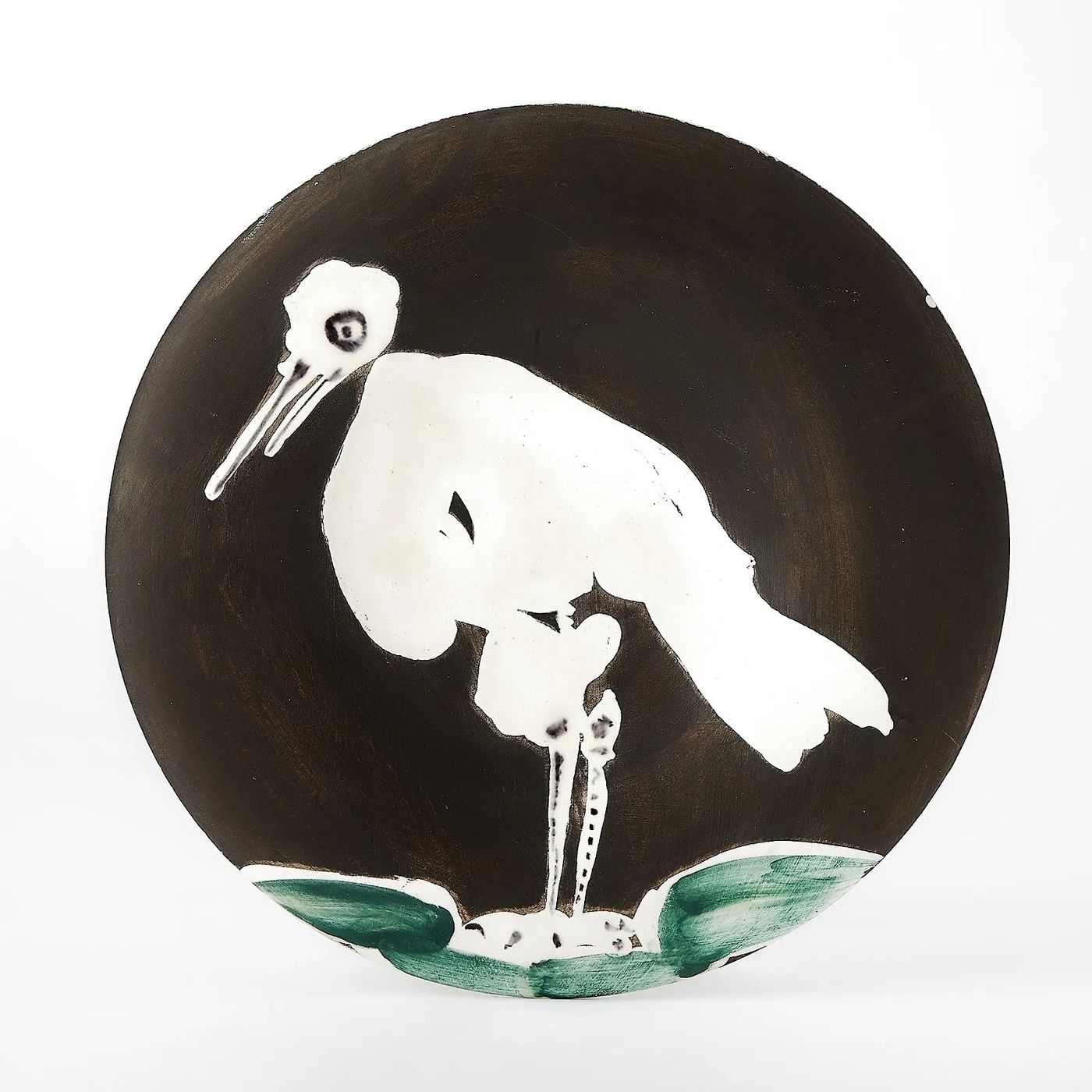
A line-by-line guide to a Picasso Madoura lot: Ramié number, marks, edition, estimate, hammer and buyer's premium, condition report and guarantee.
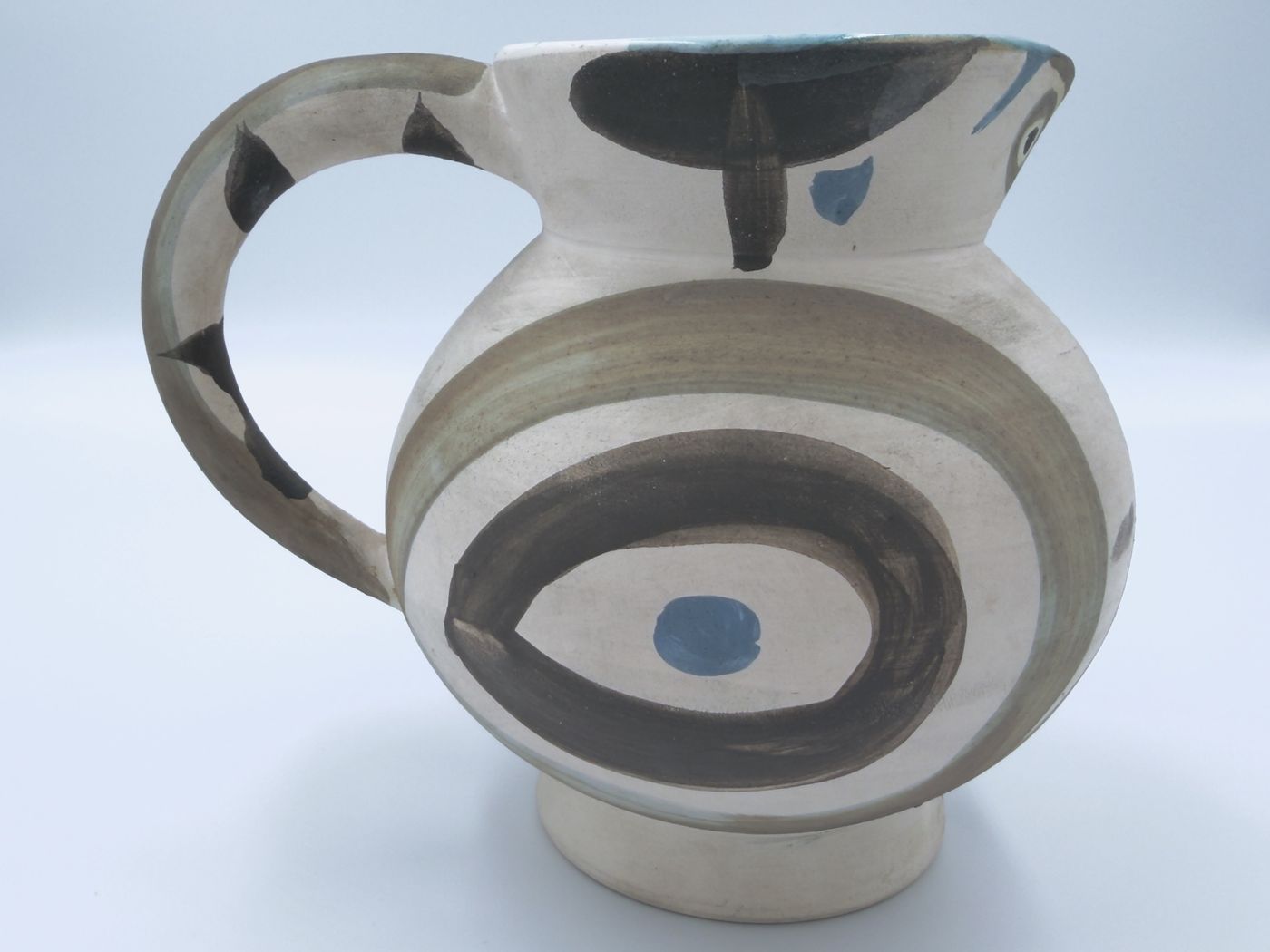
A practical checklist for photographing and documenting a Picasso Madoura ceramic: the views, marks, measurements, condition and papers a specialist needs.
Which past auction results predict a Madoura ceramic's price best? We tested nine ways of choosing comparables on 5,000+ public sales.