

How Damage, Restoration and Condition Affect Picasso Ceramic Values
How chips, cracks, firing flaws and restoration affect Picasso Madoura ceramics, how auction houses describe condition, and what public results show.
Prepared by Artemis Collection. Market figures are drawn from public auction records as described in the methodology note; they are not appraisals.
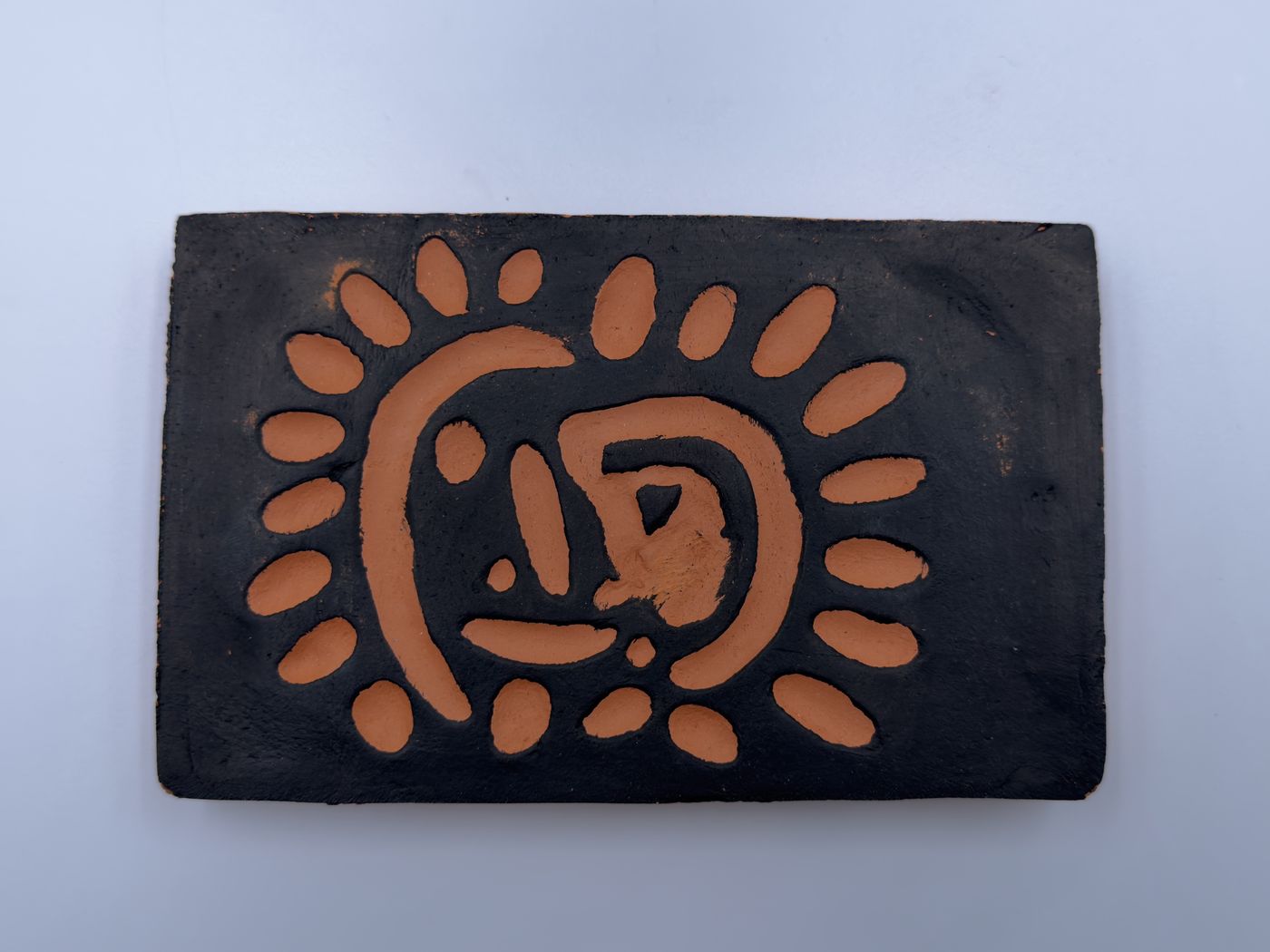
Condition matters to the value of a Picasso ceramic, but not in a way that reduces to a fixed discount. How much a chip, crack or old repair matters depends on what it is, where it is, how visible it is, whether it has been honestly described, and above all which design it is on. The public evidence on the size of the effect is thinner than often assumed. In the one set of public auction records we have that pairs condition notes with prices, lots recording a chip, crack or restoration sold lower relative to other sales of the same design, but the sample is small and comes from one auction house.
Two practical conclusions follow. Do not restore a piece before getting advice. And describe what you know about its condition plainly when you ask anyone to look at it.
Making features are not damage
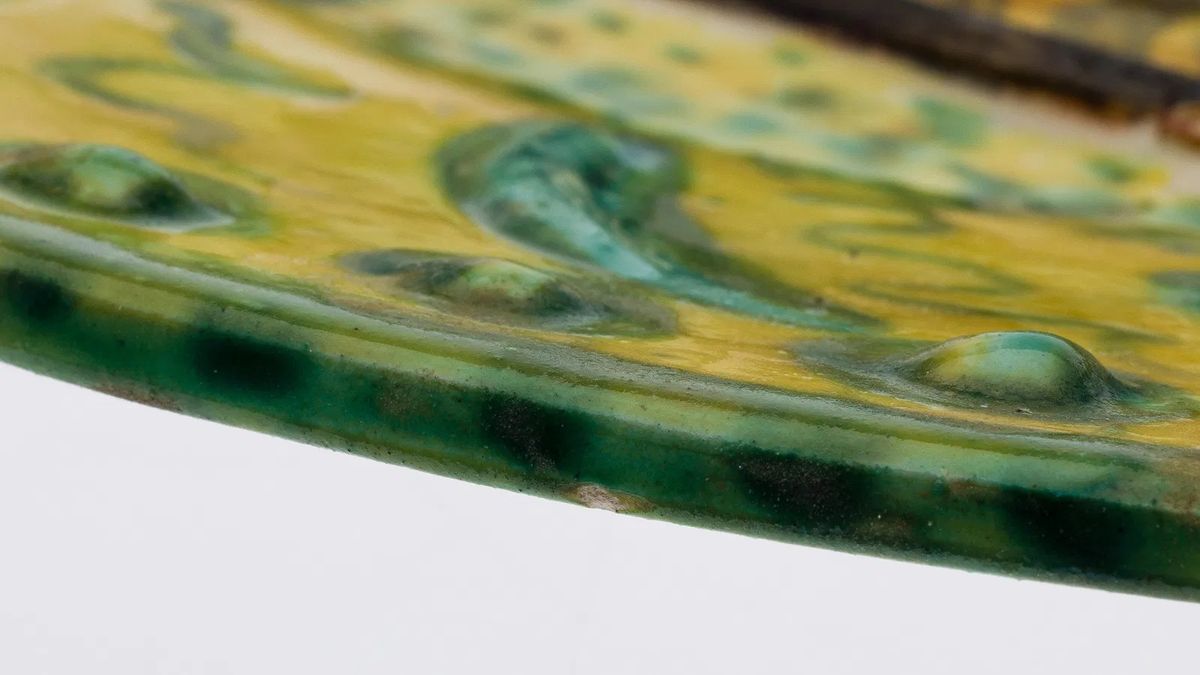
Picasso's Madoura editions were made in a working pottery. Ramié's catalogue describes almost every design as white or red earthenware, many decorated with engobes (coloured slips), oxides, paraffin or patina, and many only partly glazed. Objects made this way carry features from the making: small bubbles or pops in the glaze, places where the glaze did not take, firing lines, marks where a foot was ground flat after firing, variations in colour from one example to another.
Auction houses usually separate these from later damage. In the condition notes of one house, Rago, that we analysed (77 notes on Madoura lots, 2018–2024), 11 attributed a feature to the manufacture, typically with the words "in the making" or "in manufacture": firing lines, clay pops, glaze misses, a grinding flake to the foot. The same notes used "excellent" in 48 cases. A making feature described as such is not usually treated as damage, though a large or prominent one can still affect how a particular example is received.
The vocabulary of condition
The terms below are the ones that appear in auction condition notes for Madoura ceramics. Where conservation literature defines a term (crack, crazing, flaking, restoration, retouching), the description follows that usage; the others are explained as auction houses use them.
| Term | What it usually means | Where it is typically found |
|---|---|---|
| In the making / in manufacture | A feature present when the piece left the pottery: firing line, pop, glaze miss, kiln grit, grinding mark | Anywhere; often the foot or reverse |
| Fleck, flake | A very small loss of glaze or slip, often at an edge | Rims, raised decoration, edges of the foot |
| Chip | A small piece broken from the body, exposing the clay | Rims, feet, handles, corners of tiles and plaques |
| Hairline | A very fine crack, sometimes visible only in raking light | Rims, often running inward from the edge |
| Crack | A split through the material, without the part becoming detached | Anywhere; more serious when it runs through the body |
| Bruise | A small impact point, sometimes with short cracks around it | Rims and edges |
| Crazing | A fine network of cracks in the glaze, caused by tension between glaze and body | Glazed areas |
| Wear, rubbing, scratches | Surface marks from use and handling | Raised decoration, high points, the reverse |
| Surface soiling | Dirt, usually on unglazed areas | Reverse, unglazed body |
| Restoration, touch-up, retouching | Later work to fill losses or disguise damage, sometimes with paint over the original surface | Wherever the damage was |
| Stabilised flake | A loose flake consolidated to stop further loss | Glazed or slip-decorated areas |
Conservators distinguish conservation, which aims to stabilise an object and keep later material to a minimum, from restoration carried out mainly for appearance. Restoration on ceramics can range from a reversible fill to work that, in the Museum of Royal Worcester's words, can "completely hide any damage by painting or spraying over any faults". Some restorations are hard to see in ordinary light; conservators use magnification, good lighting and ultraviolet light to find them. Owners do not need to do that themselves.
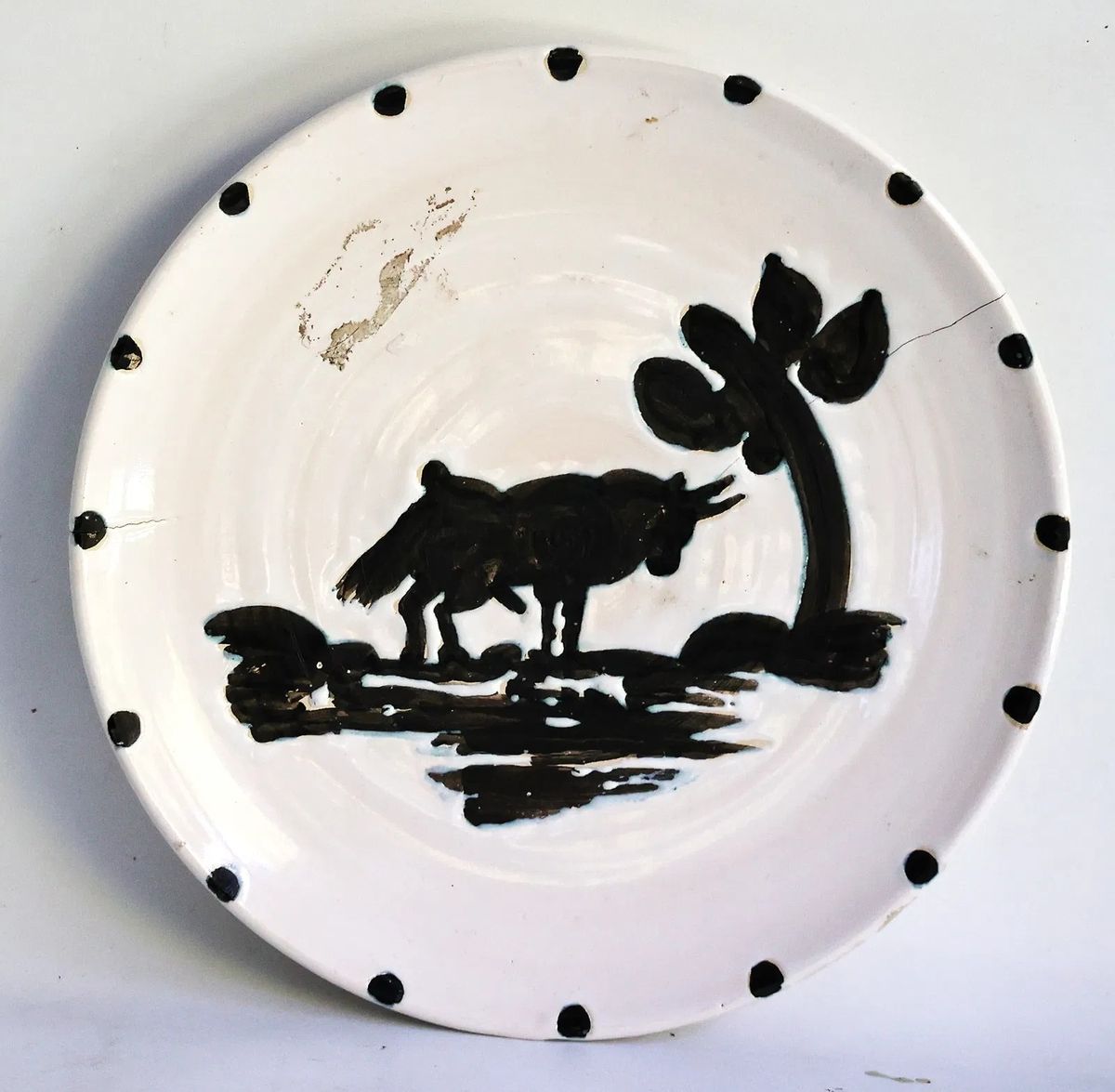
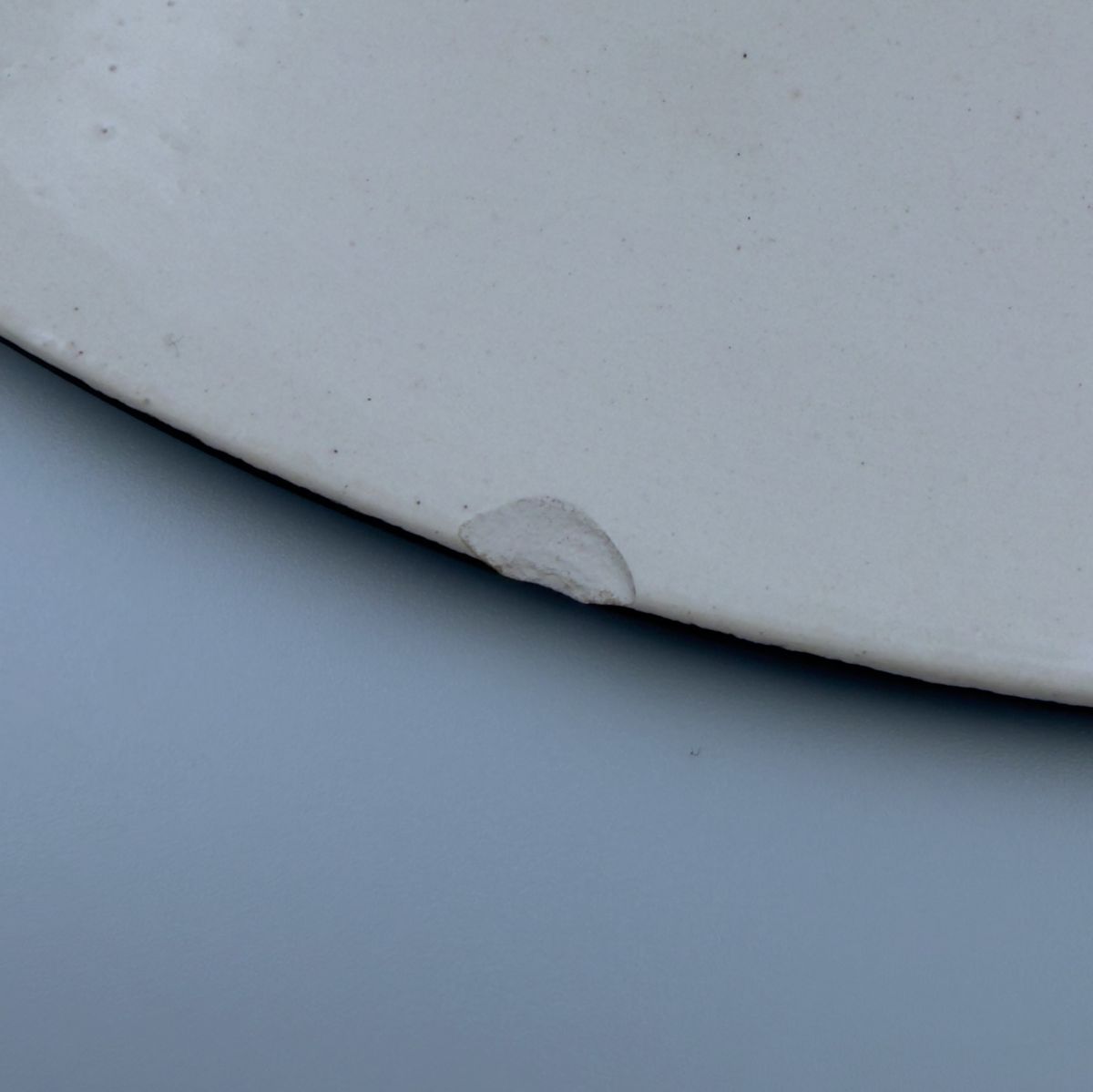
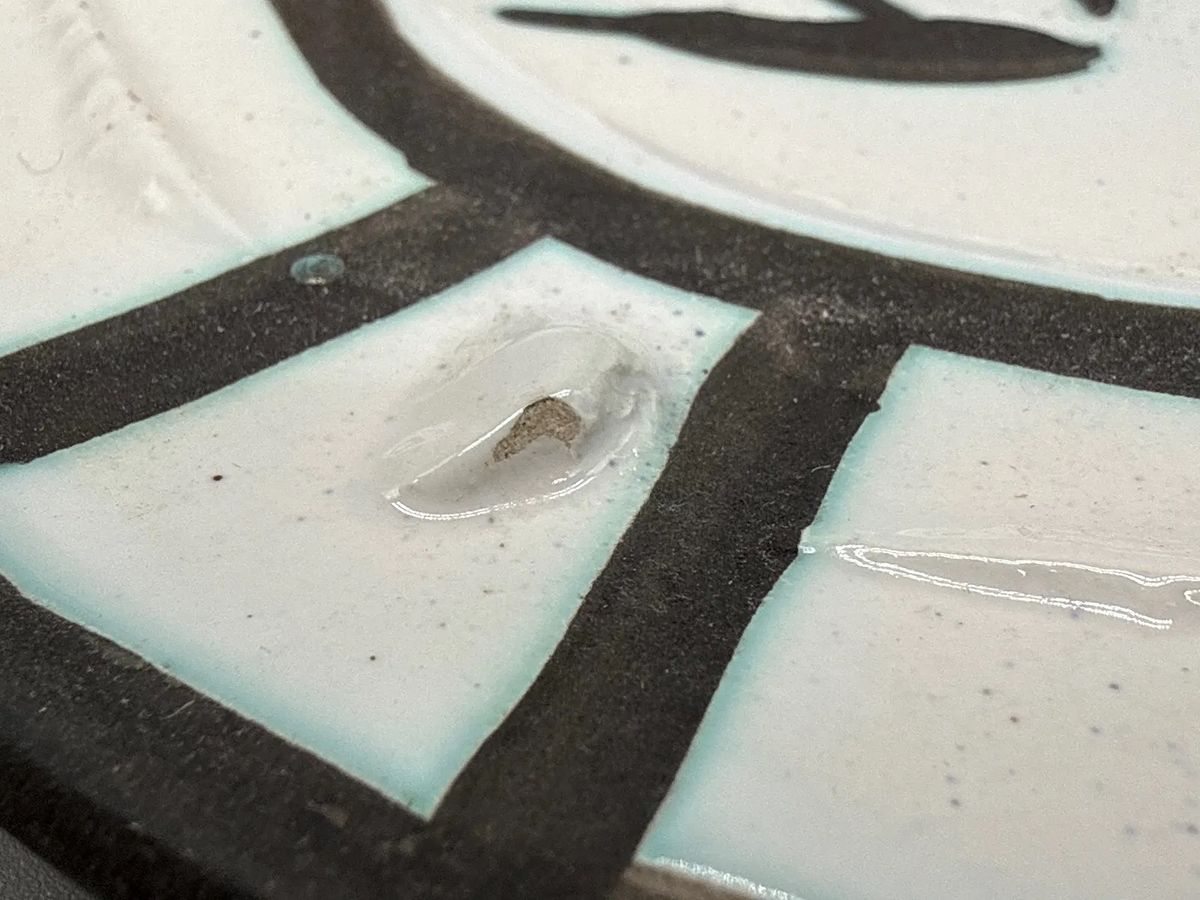
How auction houses disclose condition
Public auction records show three ways in which condition reaches a buyer.
- In the lot description. Older Christie's catalogues of prints and multiples, in which Madoura ceramics were often sold, printed condition within the description: "minor surface soiling, two small chips at the rim, otherwise in very good condition". Of 2,527 Christie's descriptions of Madoura lots in our records, 172 contain such wording; almost all date from 1995 to 2012.
- In the medium line. A few more recent Christie's descriptions add "with restorations" to the description of the object.
- In a separate condition note or report. Rago publishes a short condition note with many lots; Christie's, Sotheby's, Phillips, Bonhams and others provide condition reports on request. Many recent catalogue descriptions for dedicated Picasso ceramics sales say nothing about condition, which does not mean the piece is perfect.
The houses' published conditions of sale put the burden of judgement on the buyer, and they are explicit that a description may be incomplete. As read on 12 November 2026:
- Christie's (New York conditions of sale) sells lots "as is" and states that any reference to condition in a catalogue entry or condition report "will not amount to a full description of condition".
- Sotheby's (buyer's guide) says that the absence of any reference to condition in a catalogue description does not imply that a lot is free from faults, restoration or repair, and provides condition reports as a convenience.
- Phillips (New York conditions of sale) treats a condition report as a statement of opinion and advises buyers to inspect a lot and request a report before bidding.
- Bonhams (UK conditions of sale) says that for porcelain and glass it attempts to detail, as far as practicable, significant defects, cracks and restoration.
- Rago Wright, which operates the Wright and LAMA sites, states that a condition report may not cover all faults or restorations and that its statements about a lot are opinion only.
In short, a buyer is expected to ask, look and judge, and a careful seller tells the house everything they know.
What the public results show, and what they cannot
Rago is the only house in our records whose lot data pairs a condition note with the price for a meaningful number of Madoura lots. We compared each Rago lot's hammer price with the median hammer price of the same design (the same A.R. number) at other houses since 2015.
| Rago condition note | Lots with a comparison | Median lot price as a share of the design's median elsewhere |
|---|---|---|
| Records a chip, crack, bruise or restoration | 8 | 0.66 |
| Records only minor flecks, wear or making features | 29 | 0.89 |
| Records nothing beyond overall condition ("excellent", "very good") | 35 | 0.86 |
In this small Rago sample (8 lots against 64), lots whose note recorded a chip, crack, bruise or restoration sold lower relative to the design's other sales. Lots noting only flecks, wear or making features did not sell lower than lots described simply as excellent.
The limits are serious, and we state them rather than a percentage discount:
- Eight lots. One more or one fewer high or low result would move the figure noticeably.
- One house. Rago's prices run below the all-house medians generally, which is why even the "excellent" group sits below 1.00. Only the comparison between groups means anything.
- Uncontrolled. Where the damage was, how visible, the design, the date and the photography all vary. Twenty-seven of the 77 notes come from a single sale in January 2020.
- Association, not cause. It shows that damaged lots sold for less in this sample, not how much any given damage costs.
We do not have systematic condition reports from Christie's, Sotheby's or Doyle, so we cannot say whether the pattern holds elsewhere.
Why the effect varies from piece to piece
The following is our interpretation rather than a measured result.
- Location and visibility. A chip to the underside of a foot is a different matter from a chip on the face of a plate or the lip of a pitcher. Houses often note when damage is "not visible when displayed".
- Extent and stability. A stable, shallow fleck is not a crack running through the body; a crack can grow.
- Restoration quality and disclosure. Good, disclosed restoration is a known quantity. Undisclosed restoration discovered later undermines trust in everything else about a piece.
- The design itself. For a design sold dozens of times a year, a buyer can choose a perfect example and will pay less for one that is not. For a rare design or a small edition, a buyer may accept condition issues to own it at all.
Should you restore before selling?
Generally, no, not without advice. Restoration costs money, may need to be disclosed and evaluated in any case, and if done badly can reduce what a buyer will pay. Buyers and auction houses usually prefer to see a piece as it is and to make their own judgement. Some houses arrange restoration as a seller's expense when they think it is worthwhile; Christie's, for example, lists restoration among the external services that may be charged to a seller.
Cleaning is a form of intervention too. Many old restoration materials are water-soluble, and cracks and chips expose the porous body to water and dirt. The Museum of Royal Worcester advises against dishwashers and strong cleaning agents for valued ceramics and recommends consulting an expert before cleaning anything with structural damage.
If a piece has active damage, such as a loose fragment or a crack that seems to be moving, keep any fragments, store the piece safely and ask a professional conservator. In the United States the American Institute for Conservation maintains a directory of members; in the United Kingdom, Icon does the same.
Describe and photograph condition plainly
When you ask anyone to look at a piece, describe what you know: chips, cracks, repairs, old glue lines, and any cleaning or restoration done while it was in your family. Photograph each issue close up and from further back to show where it is. Our photography checklist explains how. Condition is one factor among several; the design and its catalogue number usually matter more (see what determines a Picasso ceramic's value), and documentation of ownership can matter too (see which provenance documents matter). If you are selling at auction, ask how condition will be described and what any restoration would cost before agreeing to it; our article on the cost of selling at auction covers seller charges.
Artemis Collection welcomes photographs of works with imperfections as well as those without.
How these figures were calculated
- Rago condition notes. Rago's lot data for Picasso ceramics identified by Ramié A.R. number, 2018–2024, where the lot record includes a condition note (77 sold lots of 64 designs). Lots identified as sold by Artemis Collection itself are excluded. Notes were grouped by keyword, in this order: restoration (restoration, touch-up, repair, stabilised); chip, crack or bruise (chip, crack, hairline, bruise, break, excluding notes whose only crack is a "firing line"); minor (flecks, flakes, scratches, wear, rubbing, scuffs, losses to patina or engobe, firing or making features); nothing beyond overall condition. Restoration and chip, crack or bruise were combined for the comparison (9 lots, 8 with a reference price).
- Reference price. For each Rago lot, the median hammer price of the same A.R. design at houses other than Rago, January 2015 – October 2026, where at least four such sales exist. Hammer prices are as reported by Rago and derived for other houses by removing the buyer's premium from the published price. In a permutation test the difference between the two groups' medians would be unlikely by chance alone (one-sided p ≈ 0.005), but that does not remove the limitations listed above.
- Christie's descriptions. 2,527 Christie's lot descriptions of Ramié-catalogued Madoura ceramics in our records (1995–2026), searched for "condition", "chip", "crack", "hairline" and "restor".
- Materials. Counted from the technique descriptions in our transcription of Ramié's catalogue (627 of 633 entries describe white or red earthenware).
Sources
- Ramié, Alain. Picasso: Catalogue of the Edited Ceramic Works, 1947–1971. Madoura, 1988.. Catalogue raisonné; source of the material and technique descriptions summarised here.
- Conservation Wiki (American Institute for Conservation community wiki): Crazing; Crack; Flaking; Inpainting; Restoration. Terminology. Accessed 12 November 2026.
- Alaska State Libraries, Archives & Museum: Condition reporting, ceramics. Condition terms for ceramics. Page updated 13 January 2026; accessed 12 November 2026.
- Museum of Royal Worcester: Care of ceramics. Cleaning and restoration guidance. Accessed 12 November 2026.
- Museum of Royal Worcester: Mending broken porcelain. Source of the quotation on restoration that can hide damage. Accessed 12 November 2026.
- Winterthur Primer: Revealing restorations through analysis and collaboration (InCollect, 27 January 2017). A museum conservator on detecting restoration with ultraviolet light and magnification. Accessed 12 November 2026.
- Christie's: Conditions of Sale, New York (23 April 2026). Condition, paragraph 3. Accessed via Christie's China site, 12 November 2026.
- Sotheby's Help Center: Guide for Buyers (global). Condition of lots and condition reports. Updated 6 November 2026; accessed 12 November 2026.
- Phillips: Conditions of Sale, New York (effective 19 October 2026). Accessed 12 November 2026.
- Bonhams: Conditions of Sale, UK (NTB/MAIN/V1/8.2026). Including the notice on porcelain and glass. Accessed 12 November 2026.
- Rago Wright, LLC: Auction Terms of Sale (last updated 2 March 2026). Accessed 12 November 2026.
- Christie's: Understanding auction fees. Seller charges may include external services such as restoration. Page undated; accessed 12 November 2026.
- American Institute for Conservation: Find a Professional Member. Directory of conservators (United States). Accessed 12 November 2026.
- Icon, the Institute of Conservation: Find a conservator. Directory of conservators (United Kingdom). Accessed 12 November 2026.
A practical checklist for photographing and documenting a Picasso Madoura ceramic: the views, marks, measurements, condition and papers a specialist needs.
Which past auction results predict a Madoura ceramic's price best? We tested nine ways of choosing comparables on 5,000+ public sales.

Size is the strongest catalogue predictor of Madoura prices: what extra centimetres add within each form, and where size stops adding value.