

Picasso Ceramic Provenance: Which Documents Matter?
Which documents support a Picasso Madoura ceramic's history, what auction houses actually print as provenance, and what papers cannot prove.
Prepared by Artemis Collection. Figures are drawn from public auction records as described in the methodology note; they are not appraisals.
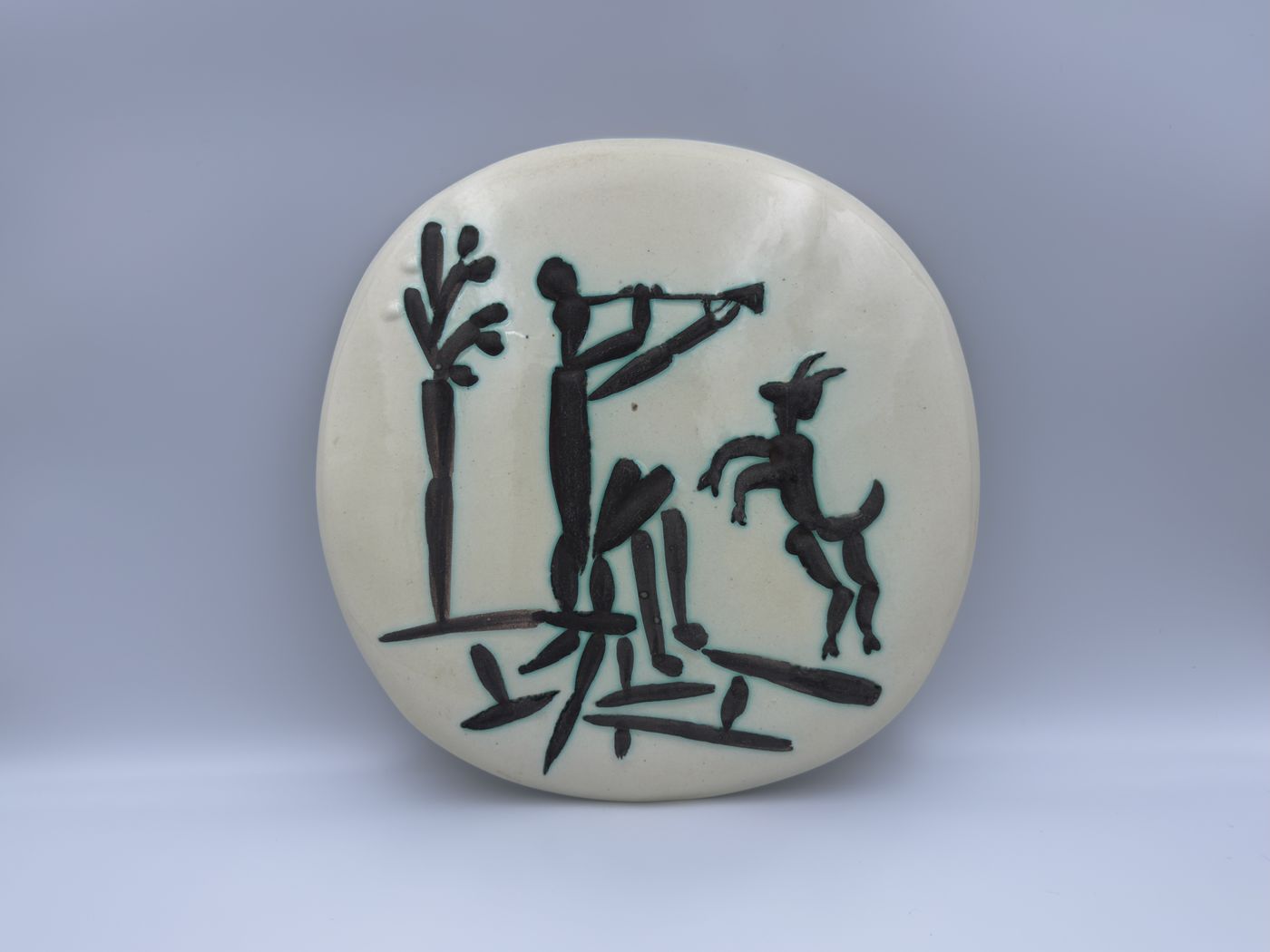
For a Picasso Madoura edition, the documents that carry most weight are those that connect the object to a specific, checkable event: a purchase from the Madoura pottery or its gallery, a named dealer's invoice, or an earlier public auction with its date and lot number. A good chain of such documents makes a piece easier to research and easier to sell. No document, however, makes an object genuine. Papers describe a history. The object still has to match the catalogue entry, the marks and the materials of the design it claims to be.
Most Madoura pieces come to market with very little documented history, and the market accepts this. Of the public auction lots we examined that had a provenance field, 85% had no provenance printed at all. Where an entry existed, it most often said only "Private Collection" and a place.
What auction houses actually print
We looked at 552 sold Madoura lots at four houses whose lot records include a separate provenance field: Phillips, Rago, Los Angeles Modern Auctions and Wright. The lots were sold between 2007 and 2026; those with a provenance entry, between 2013 and 2026. Of these, 83 lots (15%) carried a provenance entry. The rate was 22% at Rago (45 of 207 lots), 12.5% at Phillips (31 of 248), 4 of 76 lots at Los Angeles Modern Auctions and 3 of 21 at Wright.
We classified each of the 83 entries by the earliest source it names:
| Earliest source named in the provenance entry | Lots | Share |
|---|---|---|
| "Private collection" with a place only | 40 | 48% |
| The Madoura pottery or its gallery (Vallauris or Cannes) | 19 | 23% |
| An earlier auction, with house, sale, date and lot | 15 | 18% |
| A named collection or estate, with nothing earlier | 8 | 10% |
| A dealer other than Madoura | 1 | 1% |
Four patterns stand out.
- "Private collection" is the default. Nearly half of all entries say nothing more than "Private Collection, New York" or similar. That is normal discretion, not a warning sign.
- Madoura-direct histories are valued, and they cluster. About one entry in four traces the piece to the pottery or the Galerie Madoura. Only 3 of those 19 say when the piece was acquired. When Christie's sold the Madoura Collection in 2012, its specialist described the pieces' provenance "direct from the Madoura Pottery" as impeccable. Several Madoura-direct entries in our sample appear to come from single consignments, so the count overstates the number of independent histories.
- Earlier auctions are the most verifiable link. Fifteen entries cite a prior sale precisely enough to look up. In 10 of the 15, that earlier sale was a prints, multiples or editions sale. When tracing a piece's auction history, search those departments as well as ceramics and design sales.
- Long chains are rare. Only 8 of the 83 entries name more than two stages of ownership.
Christie's, the largest seller of these ceramics, publishes descriptions that our database holds without a separate provenance field, so we could not include its lots in this count. The figures describe these four houses only.
The documents, and what each contributes
| Document | What it can show | Its limits |
|---|---|---|
| Invoice or receipt from the Madoura pottery or the Galerie Madoura | Purchase at the source, often with a date | Rarely names the design by catalogue number. It should still match the piece. |
| Dealer or gallery invoice | A named seller and a date | Only as reliable as the dealer and the description on it |
| Auction invoice, catalogue entry or lot page | A public, datable sale that anyone can check | The lot description is the house's cataloguing at the time, not a guarantee |
| Gallery or exhibition label on the base | Past handling or display | Labels can move between objects. Record and photograph them; do not remove them. |
| Exhibition or publication reference | That this design (sometimes this piece) was shown or illustrated | For editions, a reference usually concerns the design, not your copy |
| Family records: letters, wills, insurance schedules, photographs of the piece in a home | Continuity of ownership | Often undated or generic ("Picasso plate"). A photograph showing the piece is worth more than a description. |
| Earlier condition reports or restoration invoices | What was done to the piece and when | Seldom kept, but valuable when they are |
For an edition, documents generally support the history of your copy. The design itself is identified by its catalogue number. The edition number painted on many pieces can help tie a document to a specific copy, when the document records it.
Gaps and inconsistencies
Gaps are the norm for decorative editions bought for use and enjoyment in the 1950s and 1960s, and a gap on its own is not a problem. Inconsistencies matter more:
- a document describing a different design, size or colourway from the piece;
- an edition number on a document that differs from the number on the base;
- a "Madoura" receipt for a design the catalogue dates after the purchase date;
- a provenance entry that appears only after a sudden rise in price, with no supporting paper.
Each of these calls for an explanation. None proves that a piece is wrong, and a clean set of papers does not prove that it is right.
What documents cannot do
Provenance supports an attribution. It does not establish authenticity. The same documents can be attached to the wrong object, and stamps and labels can be copied. The questions that settle whether a Madoura edition is what it claims to be are about the object itself: its form and dimensions against the catalogue, its clay, glaze and decoration, and whether its marks fit its class (see the stamps and marks guide). For a work believed to be unique rather than an edition, the Picasso Administration describes a committee, the Comité Picasso, that gives opinions on authenticity.
Artemis Collection is not an appraiser. We use documents, as auction houses do, to research and describe a piece's history, alongside an examination of the object itself against the Ramié catalogue.
Keeping records
- Keep originals. Store invoices, labels, letters and photographs together, with copies kept separately.
- Photograph before anything changes. Photograph the base, any labels and the edition number before shipping, cleaning or restoration.
- Write down what you know while it can still be checked. Note when and where a piece was bought, and from whom, while people who remember are available. Anyone settling an estate should take advice from qualified advisers on the legal and tax side, which is outside the scope of this guide; our note for heirs and executors covers the practical first steps.
- Protect earlier owners' privacy. Auction houses routinely print "Private Collection" with only a place. You can share full documents with a prospective buyer or house without publishing names.
See also originals, editions and reproductions for how the type of piece affects which documents matter most, what a Picasso ceramic is worth for how provenance weighs against design and condition, and the buyer's due-diligence checklist for the questions to ask a seller.
How these figures were calculated
- Dataset. Sold Picasso Madoura lots keyed to a Ramié number in the Artemis Collection research database, from the four houses whose stored lot records include a structured provenance field. Lots identified as sold by Artemis Collection itself are excluded, as are lots under $300 hammer, multi-object lots, "style of" and "after" titles, and aggregator duplicates. That leaves 552 lots sold between 2007 and 2026, of which 83 (sold 2013–2026) have a non-empty provenance entry.
- Classification. We read each entry by hand and assigned the earliest source it names to one category.
- Limits. Provenance printed in a catalogue is what the consignor supplied and the house chose to publish. Absence of an entry does not mean absence of documents. Several entries come from single consignments. The four houses are not the whole market.
If you have papers for a Madoura piece, photograph them alongside the object and include them with an inquiry to Artemis Collection.
Sources
- Public auction lot records with a provenance field: Phillips, Rago, Los Angeles Modern Auctions and Wright, 2007–2026. Artemis Collection analysis; method in 'How these figures were calculated'. Owners' names are not reproduced.
- Christie's press release for The Madoura Collection sale (2012), as reprinted by Artdaily. Accessed 6 November 2026. Specialist comment on provenance 'direct from the Madoura Pottery'; secondary reprint.
- Alain Ramié, Picasso: Catalogue of the Edited Ceramic Works 1947–1971 (English edition, Madoura, © Galerie Madoura 1988). Preface pp. 9–10 on marks and editions. Cited by page; not reproduced.
- Picasso Administration, home page (authentication section). Accessed 6 November 2026. Describes the Comité Picasso, which gives opinions on authenticity.
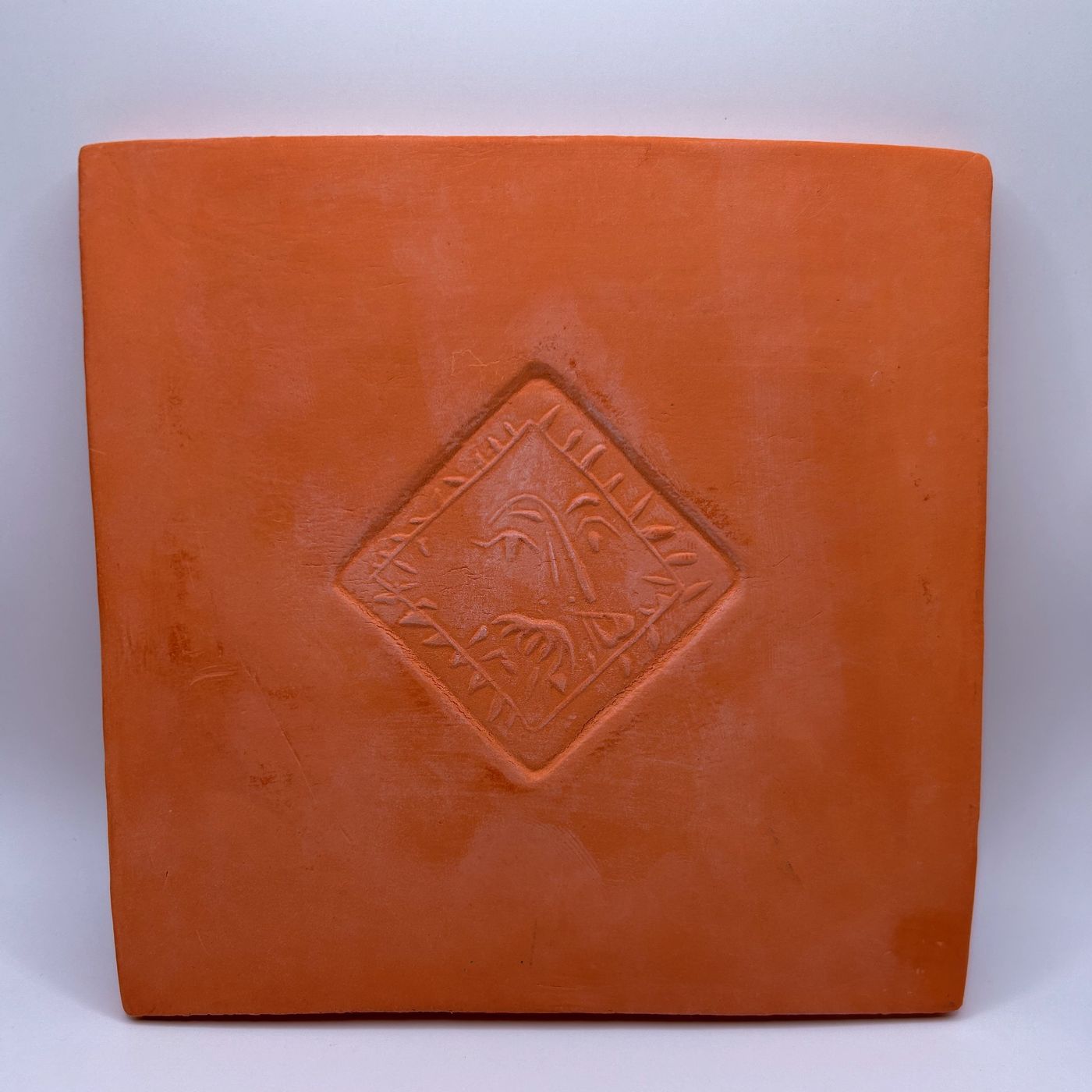
What an A.R. (Alain Ramié) number is, how to read a catalogue entry, and how to use the number to research a Picasso Madoura ceramic.
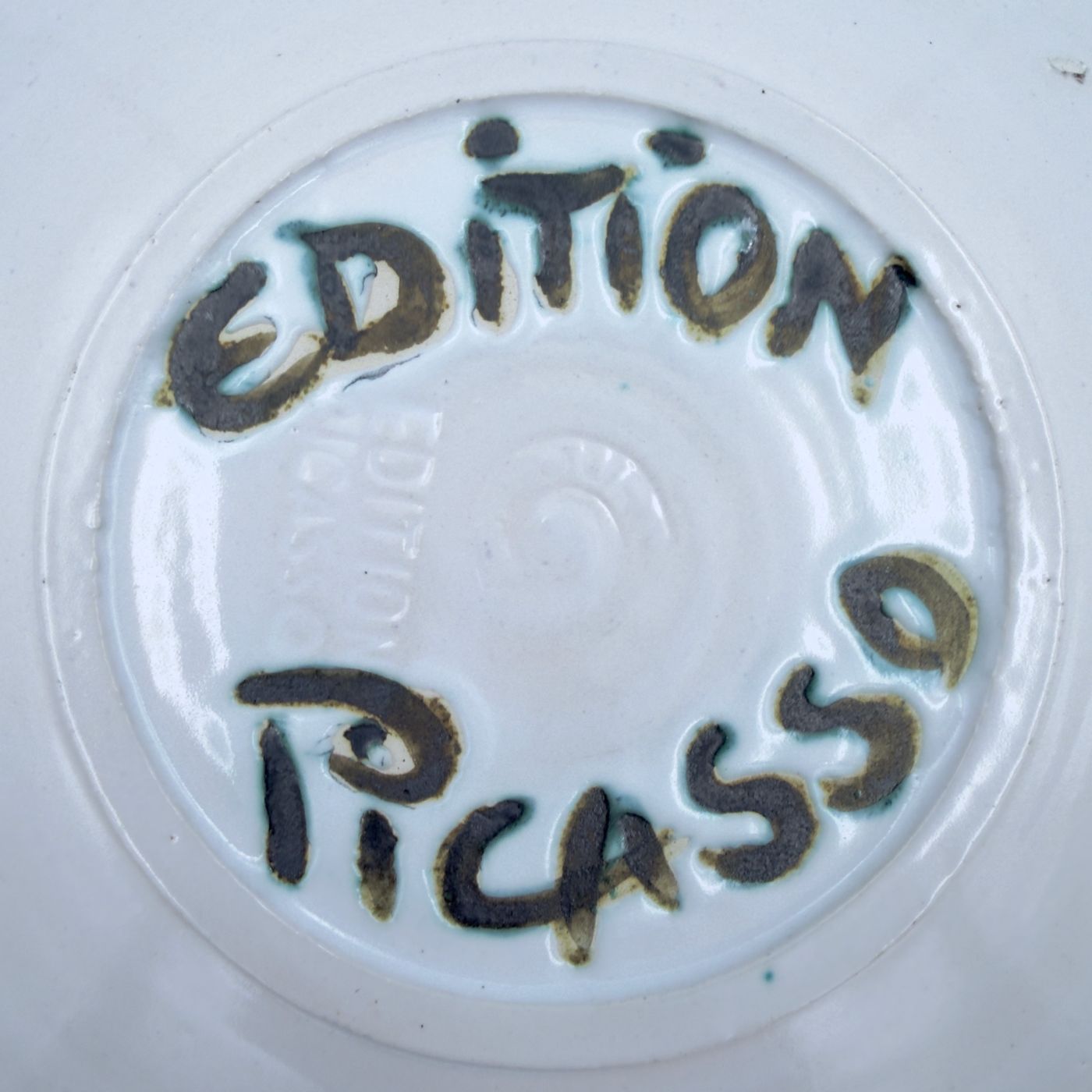
What the stamps on Picasso Madoura ceramics mean: Madoura Plein Feu, Edition Picasso, Empreinte originale, Poinçon original, numbers and codes.
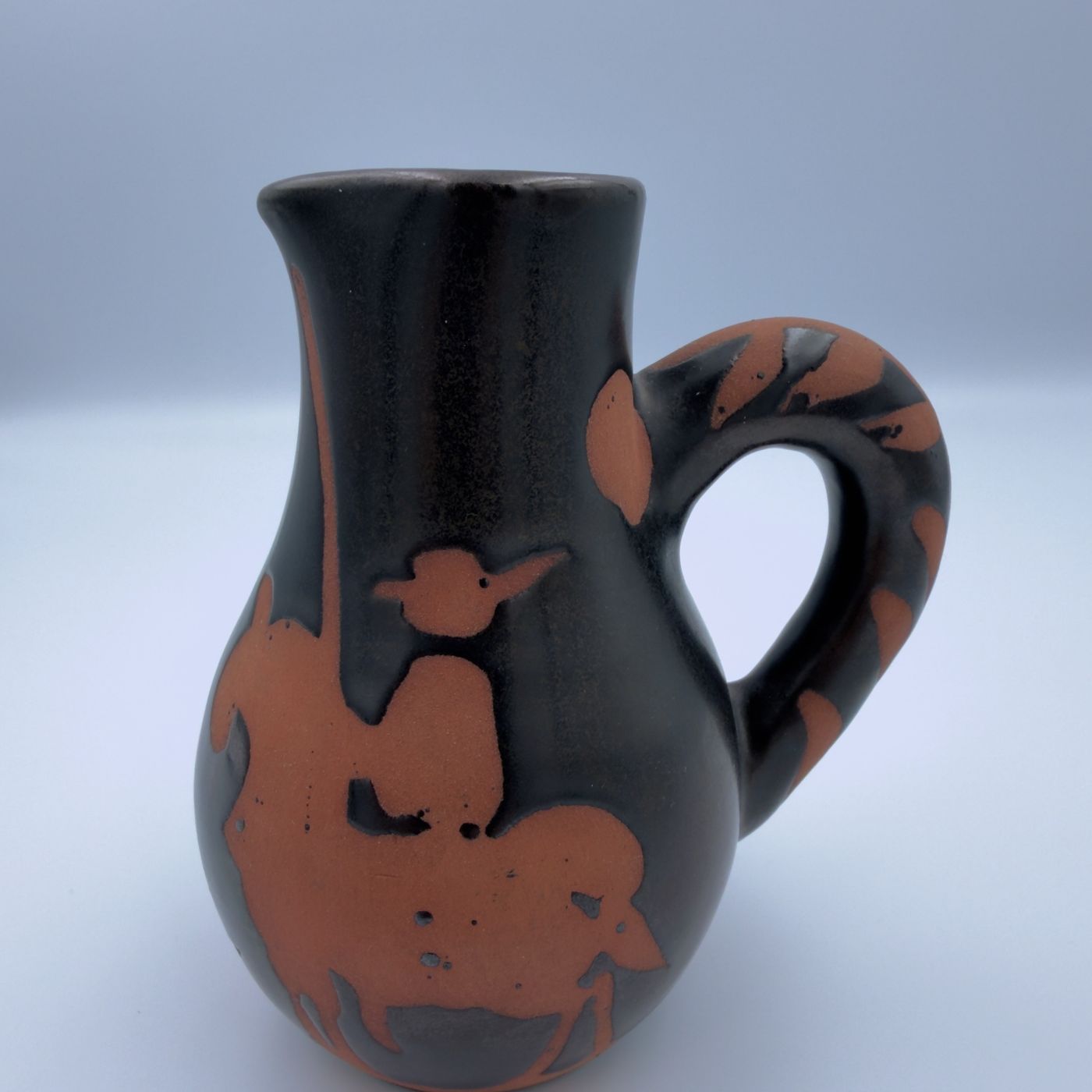
How the Madoura pottery produced Picasso's ceramic editions: the people, the three methods, materials, forms, edition sizes and numbering, with sources.