

The Same Picasso Ceramic, Two Different Prices
Why two examples of one Madoura design sell at very different prices: what the sale, the object and the edition number explain, from public results.
Prepared by Artemis Collection. Market figures are drawn from public auction records as described in the methodology note; they are not appraisals.
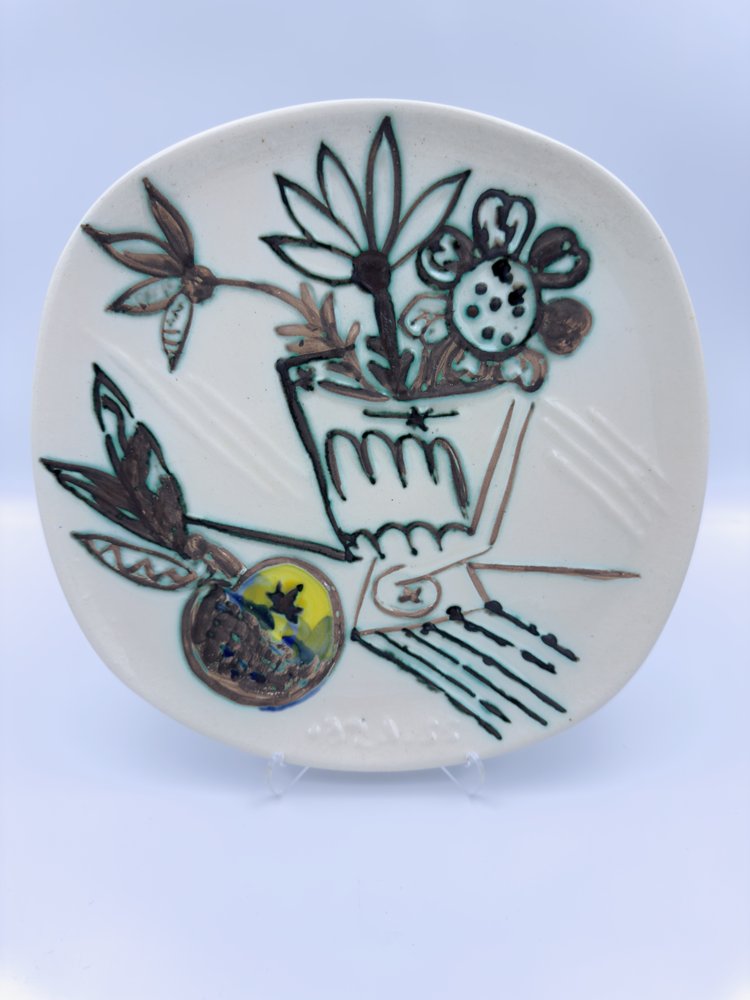
Two examples of the same Picasso Madoura design, with the same Ramié number, routinely sell for prices 40% or more apart, even within a single year. Our measurements on public results point to three sources of the gap, in this order of size: the particular sale a piece is offered in, the particular object (how well its decoration, glaze and impression came out, its condition, and whether it is a recognised variant), and chance in the room. Two things owners often expect to matter show little systematic effect in public results: a low edition number, and a sale billed as a named collection.
The practical lesson is that one comparable sale does not establish the value of another piece. Our article on what a Picasso ceramic is worth describes how wide the spread is; this one looks at where it comes from.
One design, 79 prices
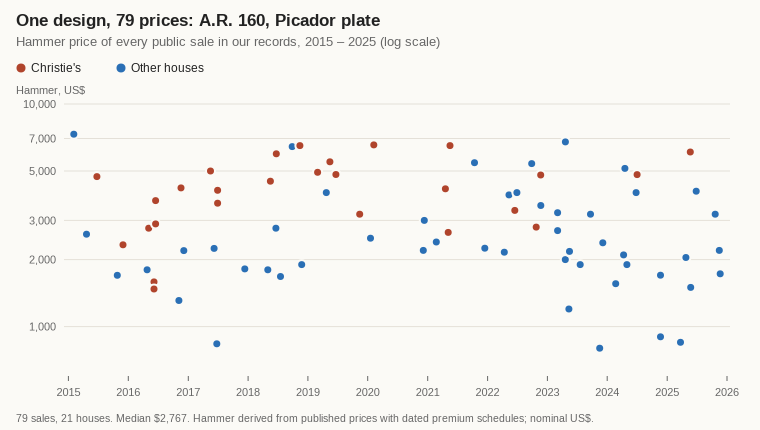
A.R. 160 is one of the most frequently sold Madoura designs. Between 2015 and 2025 we have 79 public sales at 21 houses. The median hammer price (the winning bid, before the buyer's premium) was about $2,770; the cheaper tenth of sales went for under about $1,550 and the dearer tenth for over about $5,600. In every year the dearest example sold for between 1.7 and 8 times the cheapest. Christie's results cluster towards the top, but not every Christie's lot beat every lot elsewhere.
All of these are the same design, made at the same pottery from the same model. So what separates a $1,500 Picador from a $5,500 one?
How much each factor explains
We took the 248 designs with at least ten public sales since 2015 and measured, for each sale, how far its hammer price sat from the average for its design. Then we asked how much of that spread could be predicted, without using the sale itself, from three things:
- the year of the sale, measured from the other designs sold that year;
- the auction house, measured from the house's other results;
- the particular sale, measured from how the other lots in the same sale did against their own designs' averages.
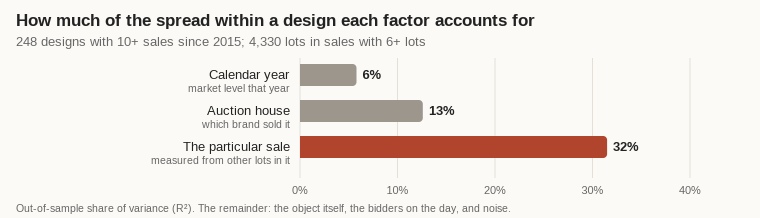
The year explained about 6% of the spread: the general level of the market moves, but less than owners tend to assume. The house explained about 13%. The particular sale explained about 32%, more than year and house combined. When most lots in a sale did well against their designs' records, so, usually, did any one lot in it; when the room was weak, the weakness was general. Across the 77 sales that offered at least 15 Madoura lots, the typical lot in a strong sale (the upper quarter of sales) sold for about 1.3 times what it would have made in a weak one (the lower quarter). Our article on the best time to sell shows the same swing sale by sale at three houses.
That leaves about two-thirds of the spread unexplained by anything about the sale. It belongs to the object, to who happened to be bidding, and to noise. The next two sections separate those as far as public records allow.
Same design, same sale, different prices
When two or more examples of the same design appear in the same sale, the house, the date, the catalogue and the bidders are shared. Whatever difference remains is mostly the objects themselves, including, in a few cases, a different catalogued version of the design.
We found 40 such cases since 2015 (83 lots). The typical gap between the dearer and the cheaper example was 14%. In about a third of cases it was 25% or more, in one case in five 50% or more, and it reached double only once. Compare that with two examples of the same design sold in the same year but in different sales: there the typical gap was 42%, and 42% of pairs were at least 50% apart.
Being in the same sale removes about two-thirds of the typical gap. Four of the 40 cases involve lots the house itself catalogued as variants or with a different mark; leaving them out leaves the typical gap at 14%. What remains is real, and two public cases show how much the catalogue wording can matter.
A.R. 127, Joueur de flûte, Christie's London, 5 February 2016, lots 280 and 282. Ramié lists this hollow plate as an original print (O.P.) in an edition of 40. Christie's catalogued both lots as conceived in 1951 and executed in an edition of 40, but not as the same version: lot 280 is described as "a variant in colour" and lot 282 as "a variant in terracotta". Christie's estimated lot 280 at £2,000–4,000 and lot 282 at £1,500–2,000, two lots apart in the same sale. They made £8,125 and £5,250 with premium, hammer prices of £6,500 and £4,200 at the 25% premium then charged. The house had judged the first version the stronger one before the sale, and bidders agreed by a similar margin (about 1.5 times at hammer). This is two versions of one numbered design, not two copies of the same version.
A.R. 82, Petite chouette, Artcurial, Paris, 16 May 2023, lots 44a and 45a. Lot 44a, catalogued simply as A.R. 82, was estimated at €4,000–6,000 and made €5,904 with fees; Artcurial's description gives its stamp as "d'Après Picasso et Madoura" and its height as 14 cm. Lot 45a, catalogued as "AR # 82 variante" and stamped "Edition Picasso et Madoura" (13.5 cm), was estimated lower, at €3,000–5,000, and made €10,758: about 1.8 times its neighbour at hammer. The two lots therefore differ in catalogued version and in the stamp, so they are not two equivalent examples. A recognised variant, or a different mark, can attract a different set of bidders; neither is interchangeable with a standard example, even though the lots carry the same number. Sotheby's sometimes titles lots "(see A. R. 82)", which refers the reader to the catalogue entry rather than asserting an exact match; such descriptions are worth reading closely.
What differs between two examples of one design
The editions were made by Madoura's craftsmen, by hand or from matrices, and many were decorated or finished by hand. Ramié's technique descriptions say how, and they explain why no two examples are identical. Two pairs of examples, photographed in the same way:
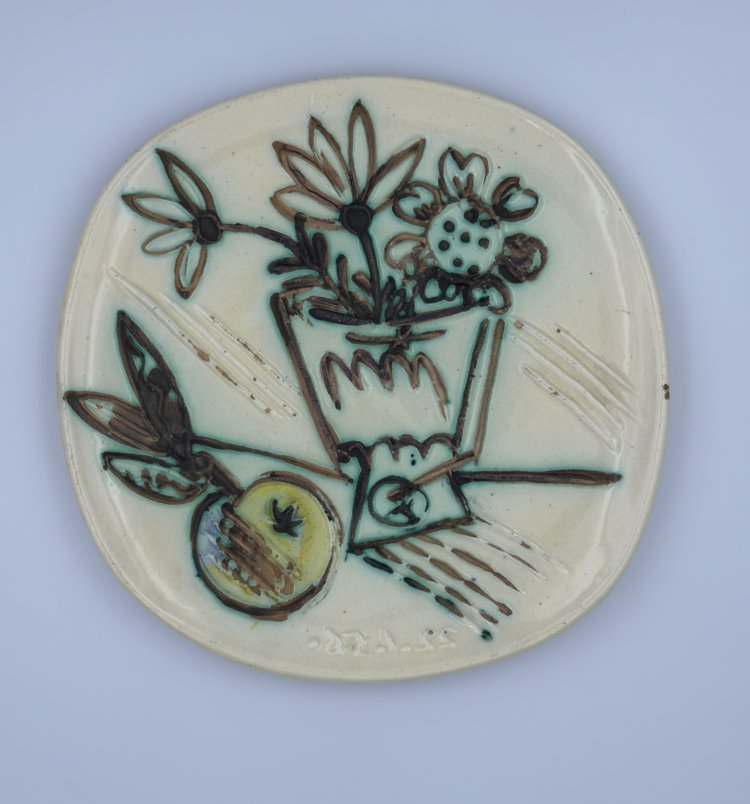
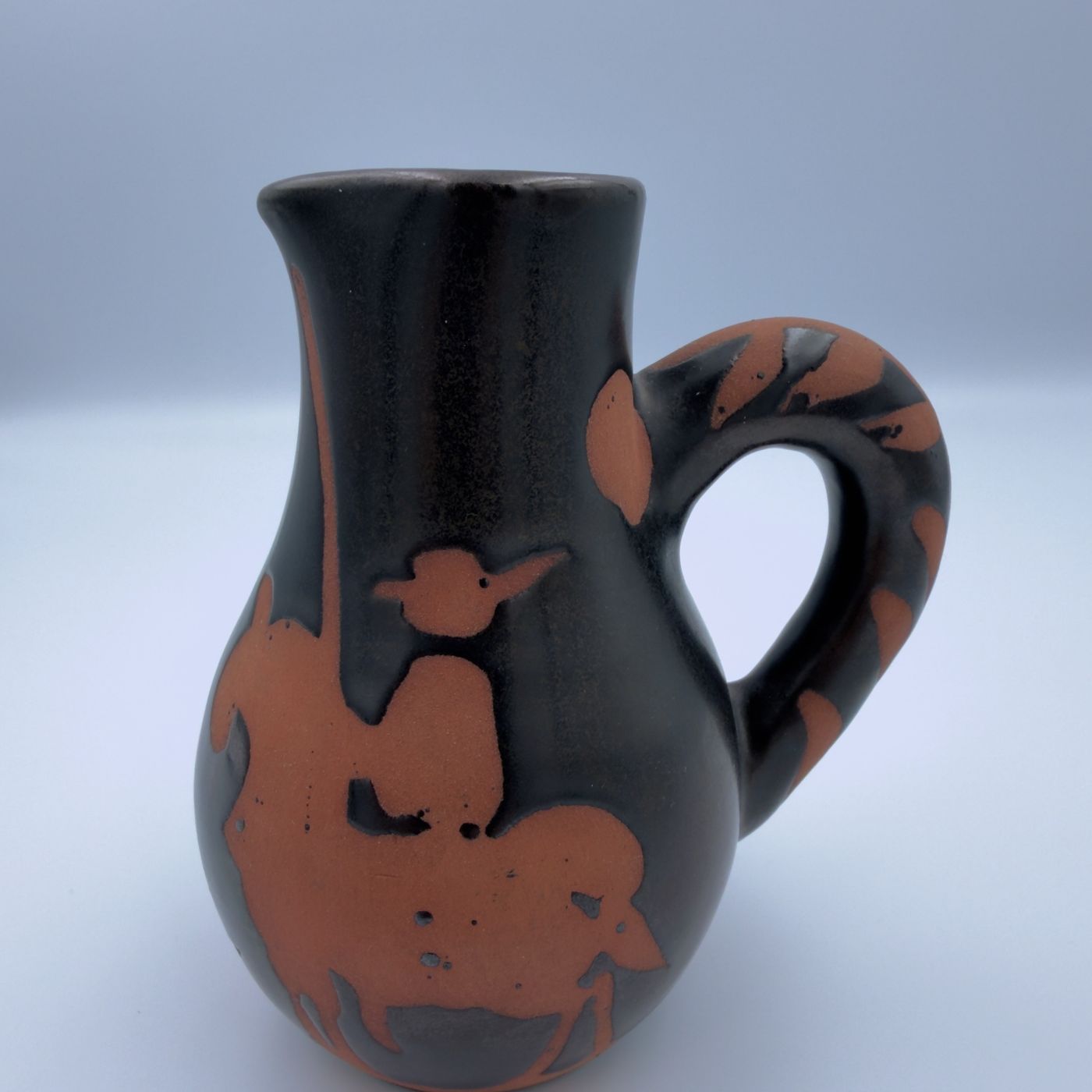
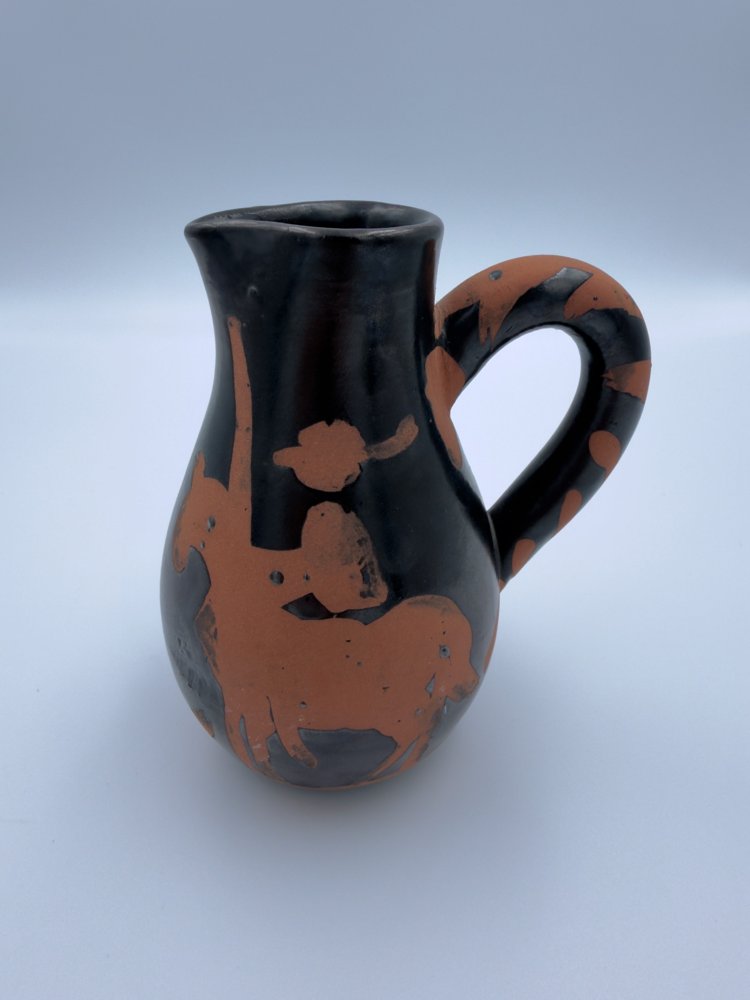
Differences of this kind, together with condition, explain much of the gap between examples sold side by side. Condition reports are not published in a form we can analyse at scale; what the public record does show is set out in our article on damage, restoration and value.
What matters less than owners expect
The edition number. Owners often assume a low number (1/200, say) is worth more than a high one. We found 733 public lots since 2015 whose description gives an edition number consistent with Ramié's edition size, and compared each with the usual price for its design in that period. Lots numbered 1–10 sold at about the design's norm (1.03 times), as did those numbered 11–50 (1.02) and 51–100 (1.00); lots numbered above 100 sold at 1.04 times. Within Christie's alone, the higher numbers did if anything slightly better. We see no premium for a low number in public results. The number matters for identification (a fraction that does not match the edition needs explaining) rather than for price.
A named-collection sale. Single-owner sales and sales "featuring property from" a named collection are marketed on their provenance. Across 470 lots sold since 2015 in sales whose title names a collection or estate, prices relative to each design's norm were the same as elsewhere (0.99 against 1.00). Individual sales ranged widely, from about 0.88 to 1.40 times, which is the sale effect again rather than a reliable premium for the name. A distinguished provenance on the individual object is a different matter, and can add to confidence and occasionally to price; see which provenance documents matter.
The order of lots. Where two examples of a design were offered in the same sale, the first offered sold higher in 23 of 39 cases and for the same price in 10. That is too few to read anything into.
What this means for an owner
- One comparable is one draw. Any single result for your design may have come from a strong sale or a weak one, and from a better or worse example than yours. Five results that sat far from their design's other sales are examined in five Picasso ceramic sales with unexpected results.
- Look at several results, at hammer, and note the sale. A result from a dedicated Picasso ceramics sale at a major house and one from a general sale at a regional house are both real prices, for different occasions. Our guide to choosing comparable sales shows which selections predicted prices best in a test on more than 5,000 sales.
- Look closely at your own example. The quality of the decoration and glaze, the crispness of a pressed design, the condition, and whether it is a catalogued variant all move the price. Good photographs of the front, the reverse and any marks let a specialist judge them; our photography checklist explains what to take.
- Do not count on the edition number or a collection label to lift the price.
If you would like a view on where your example sits within its design's range of prices, Artemis Collection can review photographs and documentation and give an informal opinion of value, not a formal appraisal.
How these figures were calculated
- Dataset. Public auction results for Picasso Madoura ceramics carrying an A.R. (Ramié) number, compiled by Artemis Collection from auction houses' published results and result aggregators (queried read-only on 3 November 2026). Superseded duplicates and lots identified as sold by Artemis Collection are excluded; aggregator copies of house records, "style of", "after" and multi-object lots, lots under $300 hammer and likely mis-catalogued lots (more than four times, or under a fifth of, the design's other sales) are removed. The full cleaned pool is 9,209 sold lots, 1986–2026; this article uses the 6,952 sold since January 2015. (The pool is smaller than the 11,200–11,450 quoted in earlier articles in this section because aggregator copies of house records have since been marked as superseded in our database.)
- Hammer prices. Derived from published premium-inclusive prices using each house's dated buyer's-premium schedule (reported directly by Rago and LiveAuctioneers); US dollars at the exchange rate of the sale, not adjusted for inflation. Local-currency and US-dollar figures were recomputed on 3 November 2026 at the exchange rate of each sale date. Case-study figures are in the sale currency, with hammer inferred from the published price and the premium in force (for example £8,125 ÷ 1.25 = £6,500).
- What explains the spread. For the 248 designs with at least ten sales since 2015, each sale's deviation from its design's mean (log hammer). Out-of-sample predictors: the mean deviation of all other lots in the same year, at the same house, or in the same sale (house and date; sales offering at least six such lots, 4,330 lots in 142 sales). Shares are the fraction of variance explained by a linear fit on that predictor (5.8%, 12.6% and 31.5%). Sale-to-sale gap: the median deviation of each of the 77 sales with at least 15 lots; upper versus lower quartile.
- Same-sale pairs. Sales (house and date) since 2015 offering two or more examples of one design, with distinct lot numbers: 40 cases, 83 lots. Gap = dearer ÷ cheaper hammer. Comparison: random pairs of the same design sold in the same calendar year in different sales (5,048 pairs).
- Edition numbers. Fractions such as "69/200" parsed from lot titles and descriptions (mostly Christie's and Phillips), kept only where the denominator equals Ramié's edition size: 733 lots. Each compared with its design's median since 2015, adjusted for the year.
- Named collections. Sale titles containing "collection", "estate of" or "property from": 470 lots in our post-2015 data, compared in the same way.
- Limits. Sold lots only; unsold lots are largely missing. Condition, decoration quality and provenance of individual lots are not coded in our data, so the object's share of the spread is inferred, not measured directly. The photographs show examples handled by Artemis Collection; they illustrate variation and are not the lots discussed above.
Sources
- Public auction records of Picasso Madoura ceramics, 2015–2026, compiled by Artemis Collection. Results published by the auction houses named in the text; see 'How these figures were calculated'.
- Christie's London, Joueur de flûte (A.R. 127), lot 280, 5 February 2016. Estimate £2,000–4,000; price realised £8,125. Accessed 3 November 2026.
- Christie's London, Joueur de flûte (A.R. 127), lot 282, 5 February 2016. Estimate £1,500–2,000; price realised £5,250. Accessed 3 November 2026.
- Artcurial, Paris, sale 4305, lot 44a: Petite Chouette (AR # 82), 16 May 2023. Estimate €4,000–6,000; result with fees €5,904. Accessed 3 November 2026.
- Artcurial, Paris, sale 4305, lot 45a: Petite Chouette (AR # 82 variante), 16 May 2023. Estimate €3,000–5,000; result with fees €10,758. Accessed 3 November 2026.
- Ramié, Alain. Picasso: Catalogue of the Edited Ceramic Works 1947–1971. Vallauris: Galerie Madoura, 1988. Entries for A.R. 82, 127, 160, 162 and 307: form, technique, colours and edition.
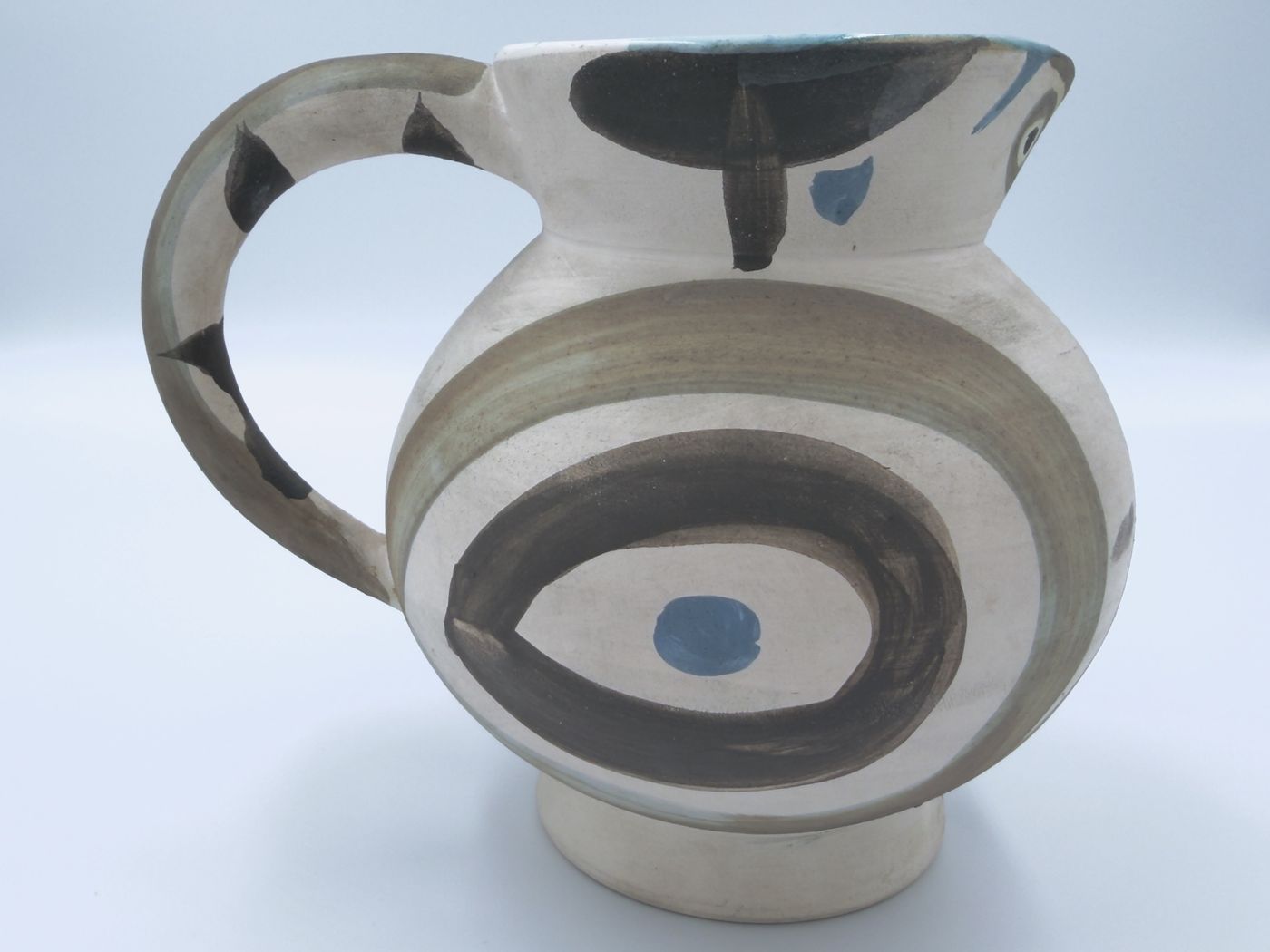
A practical checklist for photographing and documenting a Picasso Madoura ceramic: the views, marks, measurements, condition and papers a specialist needs.
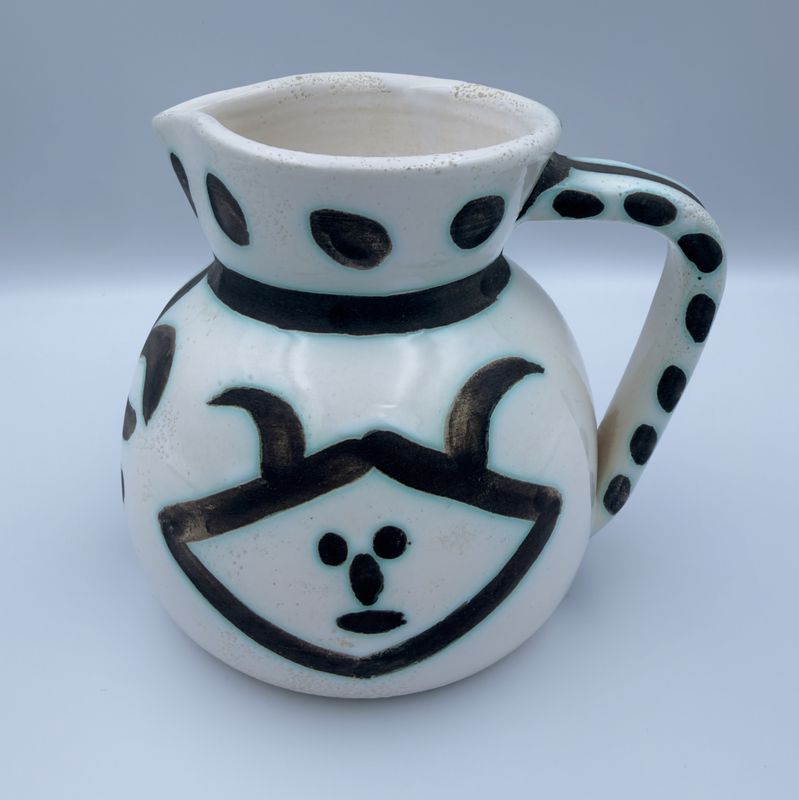
Which past auction results predict a Madoura ceramic's price best? We tested nine ways of choosing comparables on 5,000+ public sales.

Size is the strongest catalogue predictor of Madoura prices: what extra centimetres add within each form, and where size stops adding value.