

When Is the Best Time to Sell a Picasso Ceramic?
Is there a best month to sell a Picasso ceramic? We tested 6,100 public auction results. No seasonal pattern held up; which sale you join matters more.
Prepared by Artemis Collection. Market figures are drawn from public auction records as described in the methodology note; they are not appraisals.
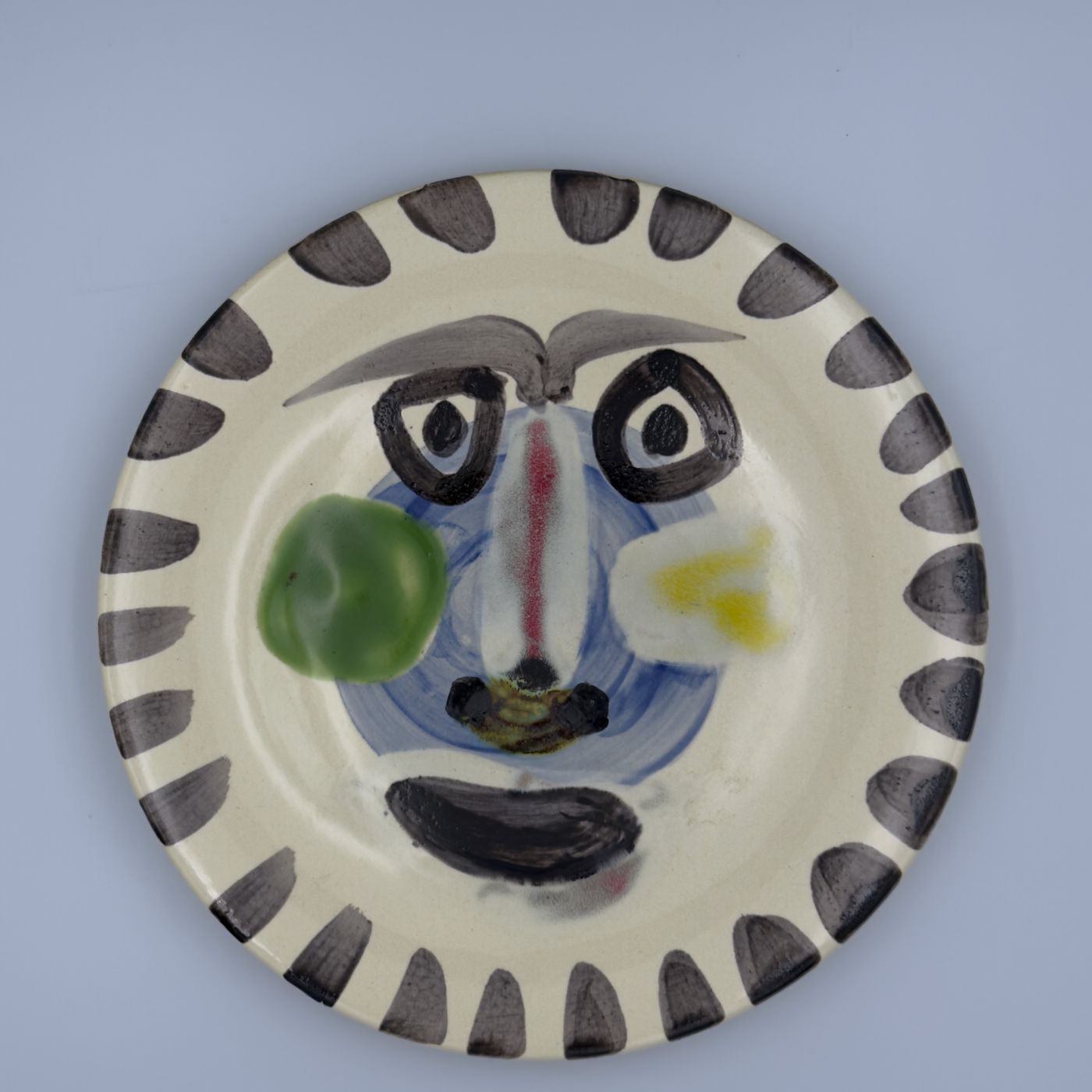
There is no reliable best month to sell a Picasso Madoura ceramic. We looked for one in more than 6,100 public auction results from 2015 to 2026. Some months looked better than others in one period, but the pattern did not repeat in the next. Two things matter far more than the month: which sale your piece goes into, and your own circumstances. This article sets out what we tested, what the auction calendar looks like, and how to think about timing without a forecast.
The short answer
- No month reliably fetches more. After allowing for the design, the auction house and the year, the ranking of months in 2015–2020 barely predicted the ranking in 2021–2026: the strongest month in the first period (March) was below average in the second, and the differences that did persist were small.
- Results differ more from one sale to the next than from one month to the next. At each of the three houses we looked at most closely, sales a few months apart, of similar material, landed at quite different price levels.
- The calendar is real even if seasonality is not. Most Madoura ceramics are sold in a handful of sales that offer many of them, held in spring and autumn. Those dates, and the consignment deadlines in front of them, set the practical timetable.
- We do not forecast prices. Nothing here says the market will be higher or lower next year.
What we tested
The question was whether a Madoura ceramic sold in one month tends to fetch more than the same design sold in another.
Comparing raw prices by month would mislead, because an expensive vase sold in May says nothing about a small plate sold in October. So each lot's hammer price was divided by the median hammer price of the same design (the same Ramié A.R. number) across all its public sales since 2015. A lot that sold for exactly its design's typical price scores 1.00. Then we looked at those scores by calendar month.
The data: 6,118 sold lots of 307 designs, each design with at least eight public sales, from January 2015 to October 2026. The details are in the method section at the end.
The unadjusted picture
| Month | Lots | Median score | Middle half of lots |
|---|---|---|---|
| January | 104 | 0.82 | 0.65–1.00 |
| February | 443 | 1.04 | 0.87–1.35 |
| March | 351 | 1.10 | 0.84–1.45 |
| April | 436 | 0.91 | 0.72–1.20 |
| May | 1,124 | 1.05 | 0.86–1.42 |
| June | 928 | 1.00 | 0.79–1.28 |
| July | 93 | 0.95 | 0.78–1.13 |
| August | 21 | 0.77 | too few lots |
| September | 621 | 1.00 | 0.81–1.25 |
| October | 651 | 0.90 | 0.73–1.07 |
| November | 1,054 | 1.08 | 0.87–1.40 |
| December | 292 | 0.83 | 0.67–1.02 |
At first sight February, March and November look strong and January, October and December weak (August, with 21 lots, is too thin to read). But each month is dominated by particular houses and particular sales. In this data Christie's November lots come from its New York and online autumn sales, while its February, March and September sales were held in London. April and October are the months in which Sotheby's, Doyle and Heritage have most often sold Madoura ceramics. A month's score is largely a portrait of which rooms were selling, and the middle half of lots in every month spans a far wider range than the gaps between months.
Does any month pattern repeat?
To separate month from house, we estimated month effects while holding the auction house and the year constant, once for 2015–2020 and once for 2021–2026. Each figure below is relative to an average month (1.00).
| Month | 2015–2020 | 2021–2026 |
|---|---|---|
| February | 1.12 | 1.08 |
| March | 1.23 | 0.96 |
| April | 0.95 | 1.17 |
| May | 1.04 | 1.05 |
| June | 0.93 | 1.02 |
| September | 1.04 | 0.94 |
| October | 0.90 | 0.98 |
| November | 1.02 | 1.11 |
| December | 0.97 | 0.92 |
January, July and August are omitted: fewer than 50 lots in at least one of the two periods.
March was the strongest month in the first period and below average in the second. April went the other way. Across the nine months with enough sales, the rank order in one period does not predict the rank order in the other (a rank correlation of about −0.08, where 1 would be the same order and 0 no relationship). February, May and November were above average in both periods and October and December below, by margins of 2% to 12%. That is smaller than the swing between two sales at the same house (below), and in recent years "November" has largely meant one event, Christie's autumn online sale, so a strong November is hard to tell apart from a run of strong sales at one house.
Our reading: there is no seasonal pattern here that an owner could rely on. That is a negative result, and we report it as one. It does not prove that timing never matters; it shows that the public record does not support choosing a month.
Which sale matters more than which month
For each sale since 2023 that offered at least 15 Madoura ceramics, we took the median of the same design-adjusted score.
| House | Dedicated sales measured | Lowest sale median | Highest sale median |
|---|---|---|---|
| Christie's (Picasso Ceramics Online) | 9, September 2023 – June 2026 | 1.00 | 1.89 |
| Sotheby's (London and New York) | 6, April 2023 – October 2025 | 0.76 | 1.34 |
| Rago (Curated: PICASSO) | 5, June 2024 – April 2026 | 0.78 | 1.30 |
Sotheby's two Picasso ceramics sales of 2023, five months apart, scored 1.34 (London, April) and 0.76 (New York, September). Rago's sale-by-sale results against its own estimates show the same thing: the median lot's hammer price ranged from 0.78 to 1.70 times the middle of its estimate across five consecutive Curated: PICASSO sales between June 2024 and April 2026.
These differences are not only "the market" moving. Each sale has its own mix of designs, condition and provenance, its own estimates and its own bidders on the day. Some of that is knowable in advance (what else is in the sale, how it is being marketed, how your piece will be estimated); much of it is not. The months only look different because these sale-level swings are added together.
Where and when the dedicated sales happen
Most Madoura ceramics sold at auction are sold in sales that offer many of them. Of the sold lots we have from the auction houses' own records for 2023–2025, 78% were in sales with at least 15 Madoura ceramics.
From 2023 to 2025 we count 28 such sales at ten houses. They clustered between late February and early July and between September and December; none fell in January or August. The regular fixtures:
- Christie's: Picasso Ceramics online sales, two or three a year, each open for bidding for two to three weeks: a New York sale in November every year, and further sales in New York or London between May and September (September 2023 in London; May–June 2024 in New York and June–July 2024 in London; May 2025 in London; May 2026 in New York and June 2026 in London). At the time of writing, Christie's November 2026 sale in New York is open for bidding from 2 to 23 November.
- Sotheby's: two sales a year, each open for bidding for about a week: a London sale in spring or early summer (April 2023, April 2024, June 2025) and a New York sale in the autumn (September 2023, October 2024, October 2025).
- Rago: Curated: PICASSO, twice a year since June 2024, in spring or early summer and in autumn.
- Others: Phillips held Pablo Picasso: Paper and Clay sales in London in 2024; Doyle combined Picasso ceramics with its Prints & Multiples sale in October 2025; Piasa held a sale devoted to Picasso ceramics from a single collection in October 2026. Several European houses include groups of Madoura pieces in design or modern-art sales.
Calendars change. Treat the list as a description of recent practice, not a promise of future dates; each house publishes its upcoming sales on its own website.
The longest stretch in 2023–2025 without any sale of this size was about four months, from mid-May to late September 2023. At any single house that holds two dedicated sales a year, the next one can be six months or more away; Sotheby's held none between late October 2024 and late June 2025.
What actually drives timing
The consignment deadline in front of each sale
A sale is catalogued, photographed and published before it opens, so a house stops taking consignments for it some weeks ahead. If a piece misses that window it waits for the next sale, often months later. The practical question is therefore not "which month" but "which sale can this piece still make, and is it the right sale for it". Our article on how long it takes to sell a Picasso ceramic sets out the stages from consignment to payment.
Fit between the piece and the sale
A dedicated Picasso ceramics sale puts a piece in front of the bidders who follow these works, alongside other examples, sometimes of the same design. Whether that helps depends on the piece. The house, the estimate and the competition within the sale are the variables an owner can discuss; the calendar month is not. Our guide to what determines a Picasso ceramic's value explains why the design (A.R. number) dominates price.
Your own circumstances
For most owners the deciding factors are personal: an estate to settle, a move, a need for funds, or simply a decision that it is time. Waiting has costs that are easy to overlook: insurance, safe storage, the small but real risk of accidental damage to earthenware, and the time spent. None of these argues for selling in a particular month; they argue for deciding deliberately rather than waiting for a seasonal advantage the evidence does not show.
Questions worth asking before you choose a sale
- Which upcoming sale would this piece be offered in, and when does consignment for it close?
- How many other examples of the same design, or of similar designs, are expected in that sale?
- What estimate would the house propose, and how have its recent estimates compared with results? (Houses differ markedly here; see how to read a Picasso ceramic auction listing.)
- If the piece does not sell, what happens next, and what does that cost?
- When would the proceeds be paid, and under what conditions? Our guides to auction versus private sale and the cost of selling at auction cover the alternatives and the deductions.
If your timing is constrained, say so at the start. It changes which options make sense.
How these figures were calculated
- Dataset. Public auction results for Picasso ceramics catalogued in Alain Ramié's catalogue raisonné (identified by A.R. number), compiled by Artemis Collection from the auction houses' published results and from results aggregators. Lots identified as sold by Artemis Collection itself are excluded.
- Cleaning. Where the same lot appeared both in a house's own records and in an aggregator, the house's record was kept and the copy dropped (same A.R. number, sale dates within four days, prices within 2%). Lots described as "style of", replicas or Italian pottery, lots under $300 hammer, and lots of more than one object were removed. Only sold lots are included; most houses do not publish unsold results in a form we can capture.
- Hammer price. Most houses publish a price including the buyer's premium. We converted to hammer price by removing a standard buyer's-premium rate for each house (26.5% for Christie's and Sotheby's, which slightly understates hammer in years when the rate was 25%); Rago's lot data reports hammer directly. Prices are in US dollars as converted at the time of each sale, not adjusted for inflation.
- Design-adjusted score. Each lot's hammer price divided by the median hammer price of the same A.R. design across all houses, January 2015 – October 2026, for the 307 designs with at least eight sales in that period (6,118 lots).
- Month effects by period. A least-squares model of the logarithm of the score on calendar month, auction house and year, fitted separately to 2015–2020 and 2021–2026, with months expressed relative to their average. The rank correlation is Spearman's, over the nine months with at least 50 lots in each period.
- Sale-level scores and calendar. Sales with at least 15 Madoura lots in the auction houses' own records (aggregator copies excluded), January 2023 – October 2026. Sale dates are the closing dates; for six Christie's online sales (2023–2025) and three Sotheby's sales (2023–2025) the dates in our records were corrected to the closing dates published on the houses' own sale pages, and the analyses were run on the corrected dates. The Rago estimate comparison uses Rago's reported hammer price and the published low and high estimates of each lot.
- Limits. Sold lots only, so a month with many unsold lots would look better than it was. Design-adjusted scores do not control for condition, edition number or provenance. Months, houses and sale formats are entangled, and the most recent period includes 2026 only to the end of October.
Sources
- Ramié, Alain. Picasso: Catalogue of the Edited Ceramic Works, 1947–1971. Madoura, 1988.. Catalogue raisonné; the A.R. numbers used to group results by design.
- Public auction results for Picasso Madoura ceramics, 2015–2026, as published by the auction houses named in the article. Compiled and cleaned by Artemis Collection; see 'How these figures were calculated'.
- Christie's: Picasso Ceramics online sale pages, 2020–2026 (sales 18333 to 24564). Bidding windows and closing dates, read on Christie's China site, 9 November 2026.
- Christie's: Picasso Ceramics, New York, online sale 24248 (2–23 November 2026). Accessed 9 November 2026.
- Sotheby's: Picasso ceramics sale pages, 2023–2025 (London 14–21 April 2023, 11–18 April 2024, 20–27 June 2025; New York 14–21 September 2023, 17–23 October 2024, 14–21 October 2025). Bidding windows, read on each sale page, 9 November 2026.
- Phillips: Pablo Picasso – Paper and Clay, London (online, concluded 27 February 2024; live, 6 June 2024). Accessed 9 November 2026.
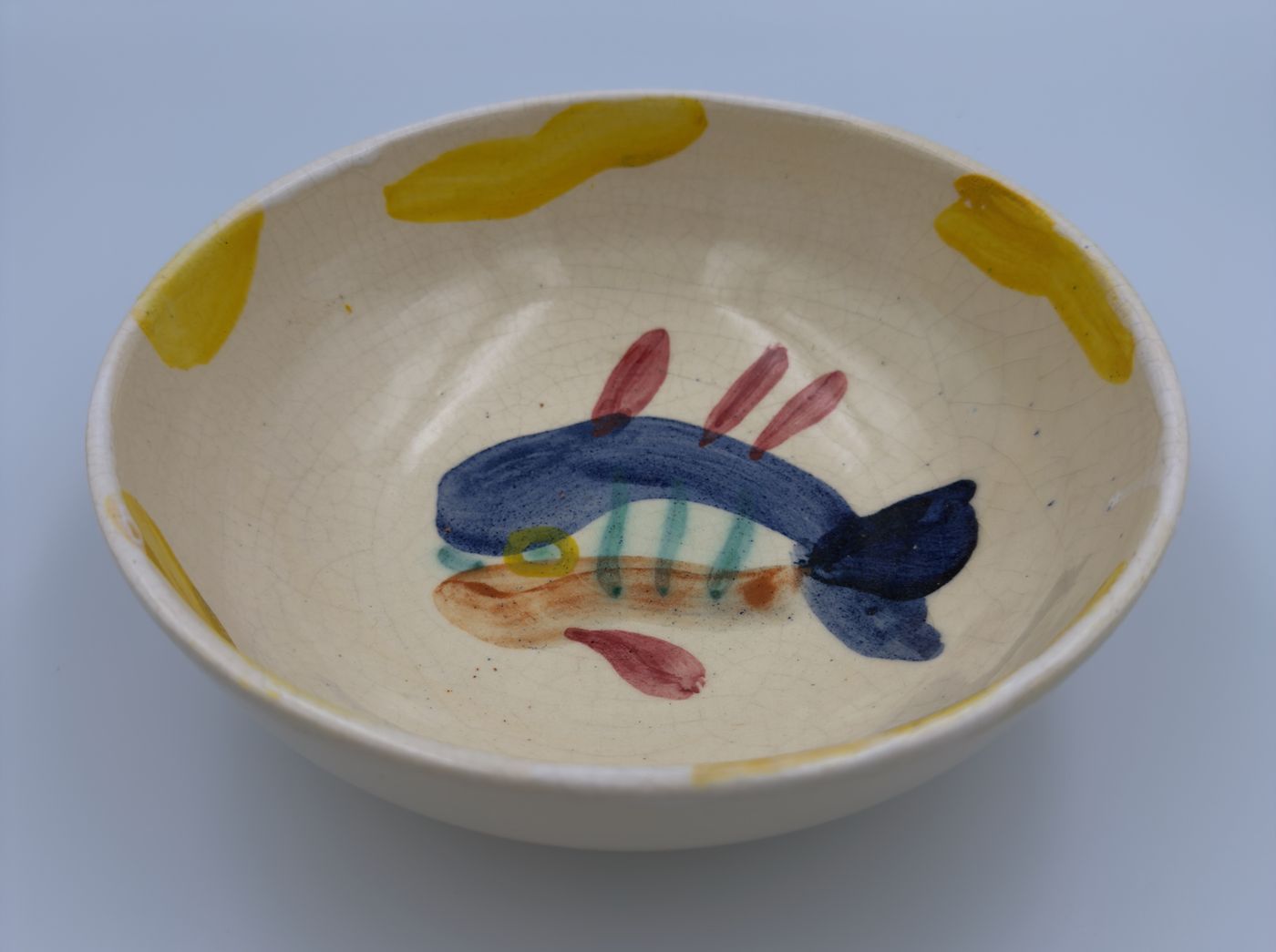
From consignment to payment: how long selling a Picasso ceramic at auction takes, what the houses publish about settlement, and what causes delay.
What 461 public Madoura results that hammered below the low estimate have in common, and what the records can and cannot explain.
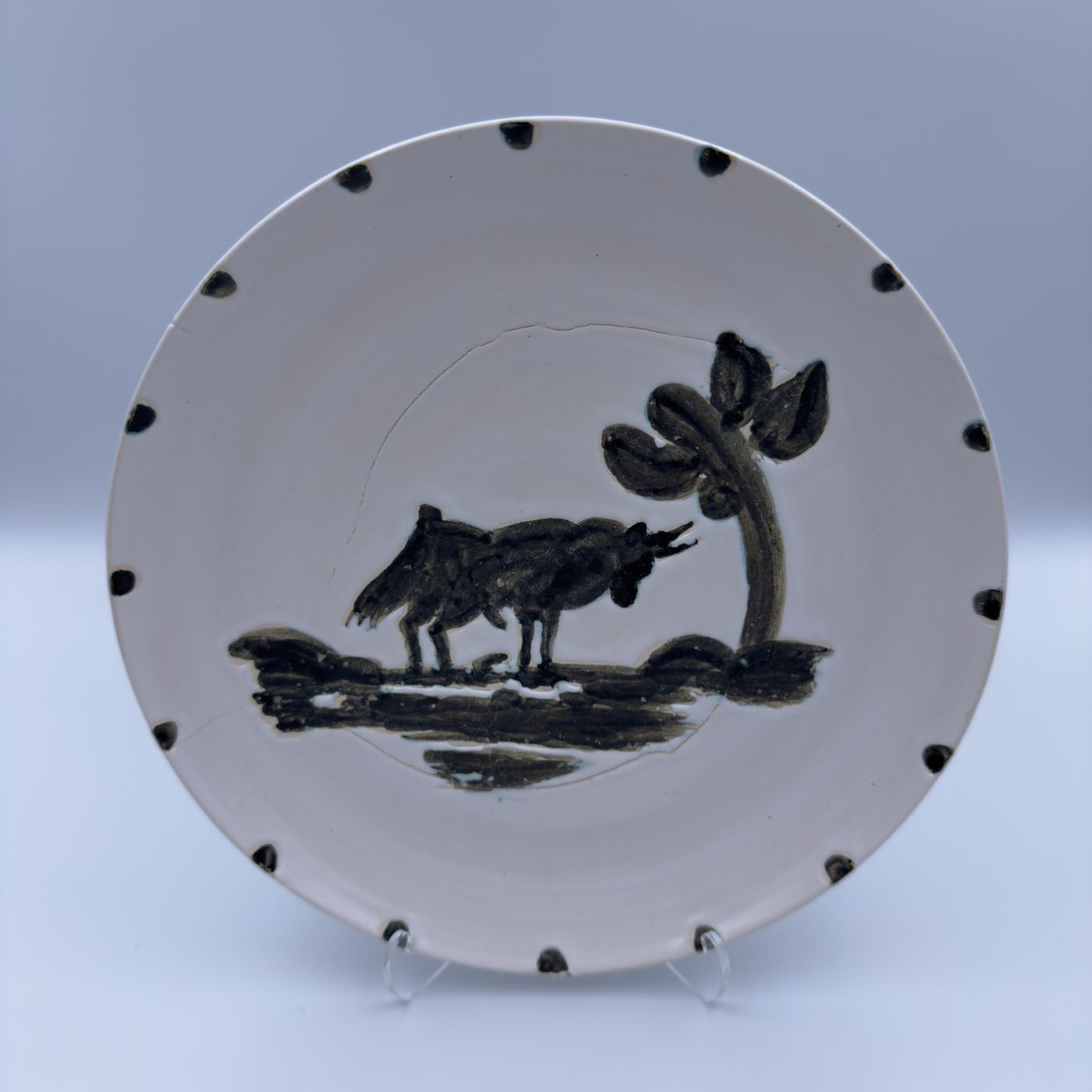
The routes for selling a Picasso Madoura ceramic, where the public market trades, what to prepare, and how prices are arrived at under each route.