

How to Sell Fine-Art Prints and Limited-Edition Multiples
Selling a print or multiple: original or reproduction, what signatures, numbers and proof marks mean, catalogue references, condition and where to sell.
Prepared by Artemis Collection. Market figures are drawn from public auction records as described in the methodology note; they are not appraisals.
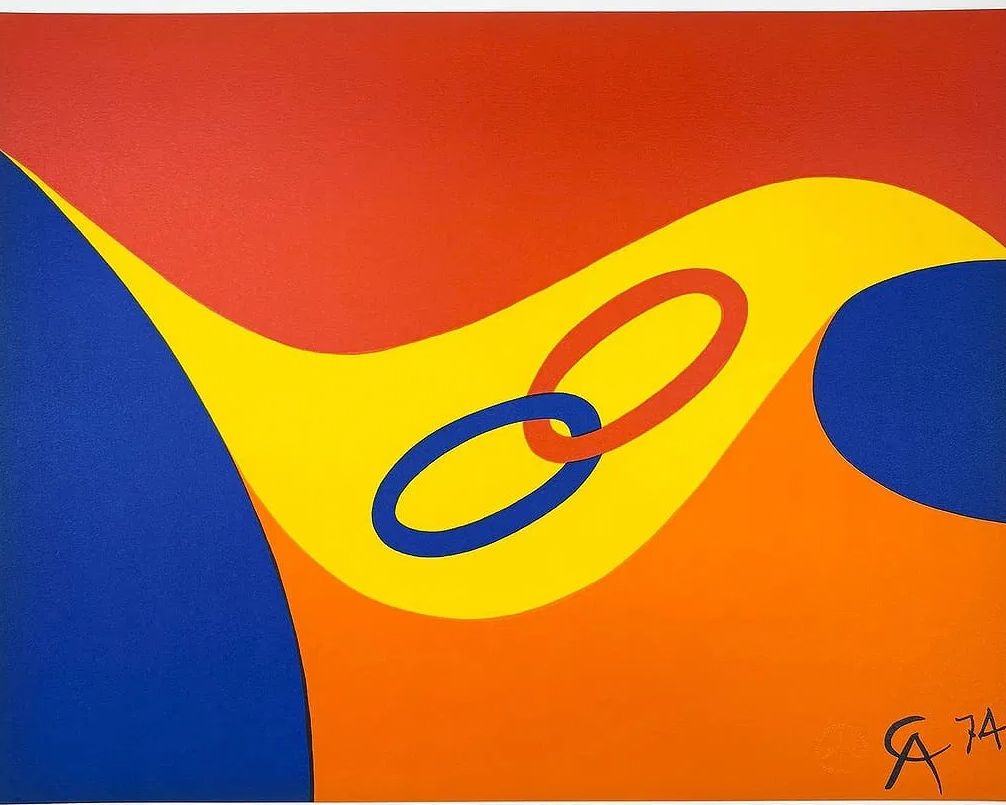
Before you can sell a print or a multiple well, you need to know exactly what it is: an original print or a reproduction, signed by hand or in the plate, part of the numbered edition or a proof, and which catalogue raisonné entry it corresponds to. Those facts decide which buyers will take it seriously and where it should be offered. The distinctions are real and sometimes subtle, and practice differs from artist to artist and publisher to publisher, so treat what follows as a framework for asking the right questions rather than a set of rules that settle every case.
Original print, reproduction or something in between
An original print is, in the Print Council of America's 1961 definition, a work for which the artist alone made the image in or on the matrix (the woodblock, plate, stone or screen) for the purpose of making a print, which was printed from that matrix by the artist or under the artist's direction, and which the artist approved. The Council itself notes that this strict definition never fitted all historical and modern practice; today it treats "original print" as a statement of the artist's intention, with the printing of the edition authorised by the artist.1
The main processes you will see named in a catalogue:
| Family | Processes | How it works |
|---|---|---|
| Relief | woodcut, linocut | ink sits on the raised surface left after cutting away the rest |
| Intaglio | etching, engraving, drypoint, aquatint | ink is held in lines or areas incised or bitten into a metal plate |
| Planographic | lithography | printing from a flat stone or plate, based on grease repelling water |
| Stencil | screenprint (serigraph) | ink is forced through a mesh where a stencil leaves it open |
A monotype is a unique image printed from a smooth plate painted in ink; a monoprint is a unique variant printed from a matrix that could otherwise print an edition.23
What is not an original print, or needs careful description:
- Photomechanical reproductions. An image of a painting or drawing reproduced by offset lithography or another photographic process, including most posters. The Print Council's original definition was written partly in response to such offset reproductions being sold as prints.1 California and New York require dealers selling multiples above set prices to disclose when a work is a photomechanical or photographic type of reproduction.56
- "After" works (d'après). Prints made by a professional printmaker interpreting an artist's painting or design. Some were authorised and even signed by the artist, and some are catalogued in the artist's catalogue raisonné; they still sell differently from prints the artist made directly. The catalogue entry and the publisher's documentation, not the word "lithograph" on a label, tell you which you have.
- Restrikes and posthumous impressions. Impressions printed later from an existing matrix, after the original edition or after the artist's death. Both California and New York require disclosure of whether a multiple is posthumous, whether its matrix produced an earlier edition, and (in California) whether the matrix was later cancelled or destroyed.56 Cancelling a plate, by defacing it after the edition, is the usual way an edition is closed.3
- Digital prints (giclée, inkjet, pigment print). Some are editions conceived and signed by living artists; many are reproductions. The description should say which.
Signatures, numbers and proof marks
Read everything written in pencil, ink or stamp on the sheet or object, and where it is.
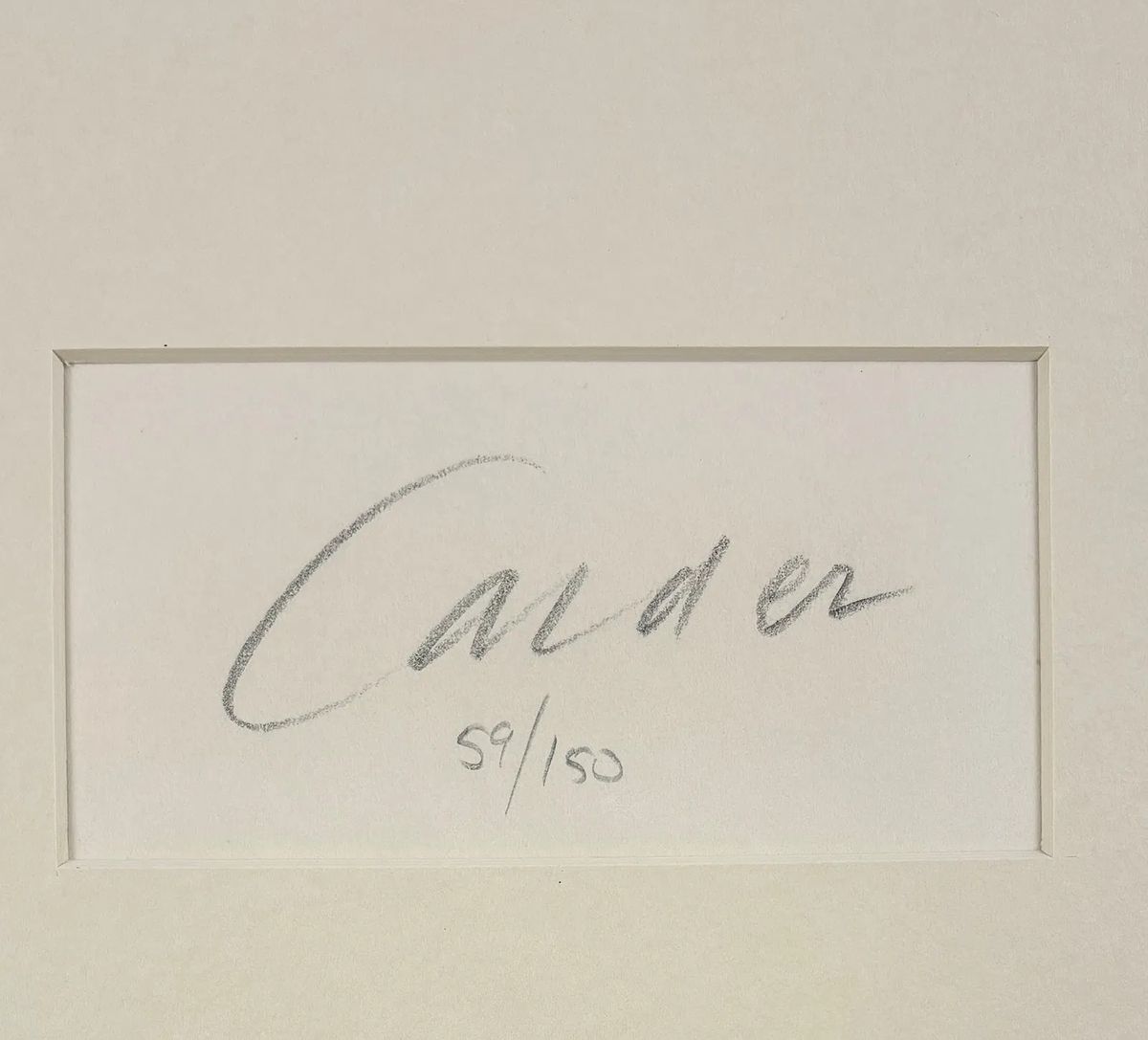
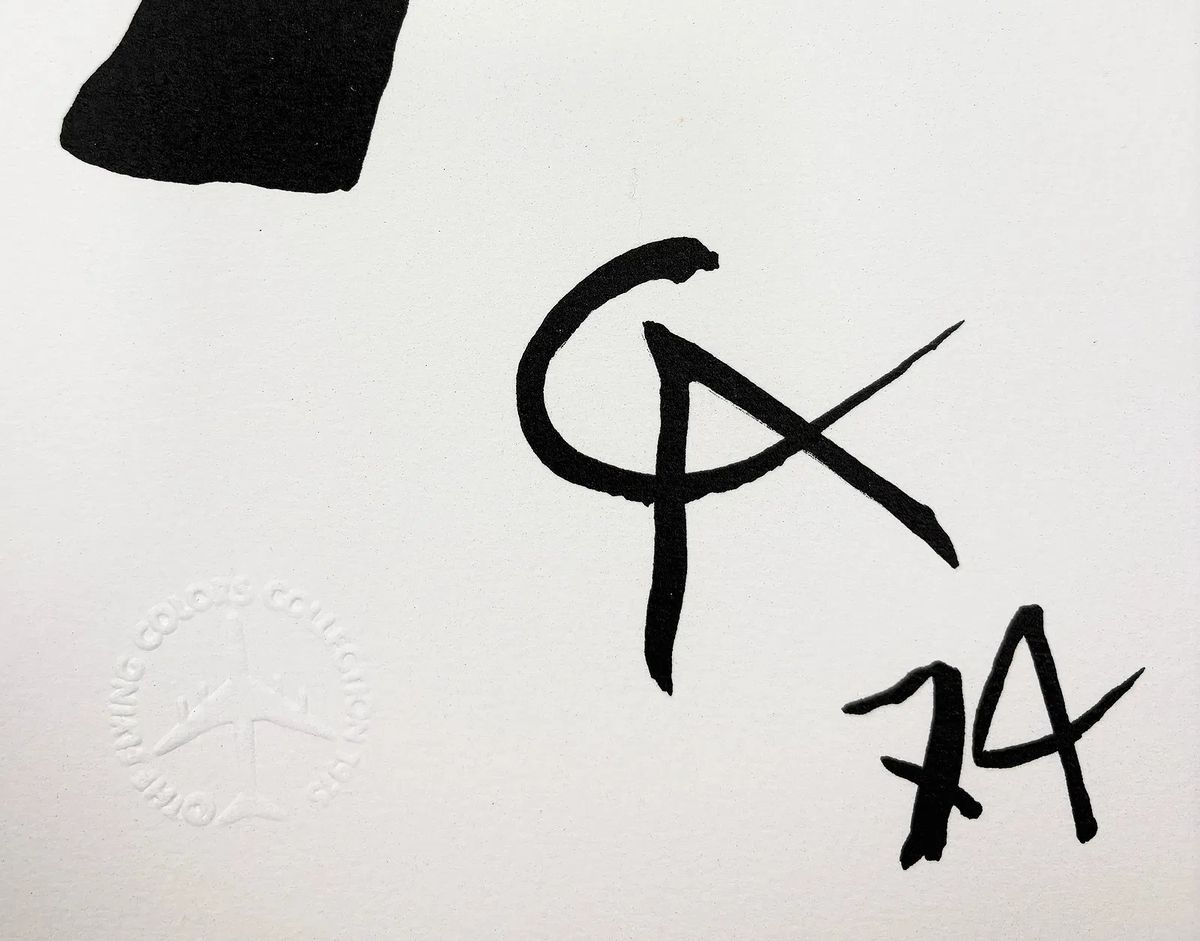
- Hand-signed means signed by the artist's own hand after printing. A signature that is part of the image ("signed in the plate" or "in the stone") is printed, not autograph. California's statute draws exactly this line.5
- Stamp-signed or estate-stamped sheets carry a stamped signature or an estate stamp, often applied after the artist's death. New York requires the dealer to say whether the name was placed by the artist, stamped, or estate-stamped.6
- Numbering such as 12/50 gives the impression's number and the edition size. The second figure is the size of the numbered edition, not of everything printed: proofs sit outside it.23 Do not assume a low number means an earlier or better impression.
- Proofs. A.P. or E.A. (artist's proof, épreuve d'artiste), P.P. (printer's proof), H.C. (hors commerce, not for sale), T.P. (trial proof) and B.A.T. (bon à tirer, the "good to print" impression that set the standard for the edition). At Tamarind, for example, a finished edition comprises the numbered impressions, artist's proofs, the bon à tirer (which belongs to the printer) and archive impressions.4
- Chops and blindstamps. Embossed marks of the workshop, printer or publisher, usually in the margin. Gemini G.E.L., for instance, places its chop beside the artist's signature.43
What the public record shows about these marks
We read the edition line of 19,474 sold print and multiple lots in Phillips catalogues (2013 to October 2026, 1,542 artists; method below).
| Edition line | Share of lots |
|---|---|
| Hand-signed and numbered | 68.4% |
| Proof (A.P., P.P., H.C., T.P., B.A.T.), signed | 9.6% |
| Hand-signed, not numbered | 9.4% |
| Numbered, not signed | 4.1% |
| Unsigned impression | 1.7% |
| Stamp-signed, estate-stamped or posthumous | 1.2% |
| Signature printed in the matrix only | 0.9% |
| Facsimile object | 0.7% |
| Other or not stated | 4.0% |
Three findings are useful to an owner:
- A signed proof is not a premium impression. Where Phillips sold both a signed proof and a signed, numbered impression of the same work (396 works, 479 proof lots and 764 edition lots), the median ratio of proof price to edition price was 1.00, and the proof sold for less in 48% of works. In this record, a signed proof sold on average at about the same price as a signed, numbered impression of the same work.
- The hand signature does matter. Where both an unsigned and a hand-signed numbered impression of the same work sold (34 works), the unsigned impressions' median was about 0.4 times the signed impressions', and lower in 82% of works. This sample is small and dominated by Banksy and Warhol editions that were issued in separate signed and unsigned versions; treat it as a direction, not a discount rate.
- Publishers are named almost every time. 85% of these edition lines name the publisher, and 42% state how many proofs existed beyond the numbered edition. If you know who published your print, say so.
For Picasso prints specifically, we have measured whether hand-signed impressions sell for more, whether edition size affects value and how lithographs, etchings and linocuts compare.
Catalogue raisonné references
For prints by most well-known artists, the catalogue raisonné number is the identification that a specialist buyer will check first. Museums generally cannot authenticate prints, and the Print Council of America advises that research begins with the catalogue raisonné.7 Auction houses give the reference in the lot title, in abbreviated form: "(B. 1198; Ba. 1180)" for a Picasso print, "(M. 727)" for a Chagall lithograph, "(F. & S. II.289)" for a Warhol screenprint, "(D. 656)" for a Miró etching.
| Artist | Catalogue commonly cited | Abbreviation |
|---|---|---|
| Picasso, prints | Georges Bloch, Catalogue de l'œuvre gravé et lithographié (Kornfeld et Klipstein); Geiser and Baer for the intaglio and relief prints | B.; Ba. |
| Chagall, lithographs | Fernand Mourlot (later volumes with co-authors), Chagall Lithographe (Sauret) | M. |
| Chagall, illustrated books | Patrick Cramer, catalogue of the illustrated books | C. books |
| Miró, etchings and engravings | Jacques Dupin, Miró Engraver | D. |
| Miró, lithographs | Joan Miró Lithographs (Maeght; the later volumes by Patrick Cramer) | M. |
| Warhol, prints | Feldman and Schellmann, Andy Warhol Prints: A Catalogue Raisonné | F. & S. |
| Ruscha, editions | Siri Engberg, Edward Ruscha: Editions (Walker Art Center) | E. |
Three cautions. First, a catalogue entry identifies the image and its edition; it does not prove that your sheet is one of those impressions. Compare medium, paper, sheet and image size, edition size, signature form and publisher with the entry. Second, some artists' print markets carry particular authenticity problems: Salvador Dalí, for example, signed blank sheets before print runs, which has made signed Dalí prints notoriously difficult to assess.8 Third, practice varies by artist and by publisher; a catalogue entry may record unsigned editions, several paper variants or proofs that do not fit the general pattern above.
For Picasso's ceramics, which are editions of a different kind, see Picasso originals, editions and reproductions.
Condition
Works on paper suffer damage that a ceramic does not.
- Light. All works on paper are damaged cumulatively and irreversibly by light; colour prints and watercolours fade, paper yellows and becomes brittle.910 Compare the colour under the mat with the exposed sheet.
- Mat burn. An orange-brown line along the edge of an acidic window mat.9
- Foxing. Small reddish-brown spots, encouraged by humidity.9
- Tape, glue and hinges. Self-adhesive tape and glue stain and are hard to remove; archival framing uses paper hinges and lignin-free board.10
- Margins. Note whether the full sheet survives or the margins have been trimmed, and whether the sheet has been laid down onto backing.
Do not have a print unframed, cleaned or restored before seeking advice: unframing it yourself risks damage, and a specialist may want to see the back as it is. Do photograph it out of the frame if that can be done safely, because glass hides condition.
Where prints and multiples sell, and what it costs
- Specialist print sales at auction houses (the editions and prints-and-multiples departments of the international and regional houses). Competitive bidding and a public result, but a seller's commission and other charges, and several months from consignment to payment. See the real cost of selling at auction for how hammer, buyer's premium and net proceeds differ; the arithmetic is the same for prints.
- Specialist print dealers, who buy outright or sell on consignment. Faster and private, at a price that reflects the dealer's risk.
- Online marketplaces. Low cost to list, but the buyer cannot handle the work, and reproductions are offered alongside originals, which tends to depress prices for unsupported listings.
Estimates are a starting point, not a valuation. For the 19,474 Phillips lots above, the median hammer price was 1.07 times the mid-estimate; 22% hammered below the low estimate and 39% above the high.
If the work is resold in the United Kingdom or the European Union, the artist or estate may be due a resale royalty. In the UK it applies from £1,000 at a sliding rate starting at 4%, capped at £12,500 per sale.11
What to have ready before you approach a buyer or auction house
- Photographs of the whole work out of the frame if safe, the signature and number, any chop or blindstamp, and the back of the sheet or the base of a multiple.
- Sheet and image measurements.
- Everything written on it, copied exactly ("12/50", "E.A.", "H.C.", a stamp).
- Publisher's or gallery invoices, certificates and earlier auction records.
- The catalogue raisonné number if you know it, or simply the title and date.
Artemis Collection buys and consigns works, gives informal opinions of value, and welcomes confidential inquiries from owners considering a sale or consignment of prints and multiples by artists we follow. We will review photographs and documentation. We do not provide formal appraisals.
How these figures were calculated
- Source: public lot descriptions for prints and multiples sold at Phillips, held in the Artemis Collection research database, queried 2 November 2026. 22,076 lots; 19,474 sold with a usable "Signed/edition" line (February 2013 to October 2026).
- Classification: the edition line was classified by keyword into the categories shown (for example "signed and numbered", proof annotations in quotation marks such as 'AP 6/10', "unsigned", "stamp-signed", "with printed signature"). Lines that merely mention how many proofs exist were not counted as proofs. A sample of each class was checked by hand; misclassification is possible at the margins.
- Same-work comparisons: a "work" is the same artist and the same lot title at Phillips. For each work with both kinds of impression, we took the ratio of the two groups' median hammer prices and report the median of those ratios. Titles are not perfect identifiers (a title can cover colour variants or states).
- Prices: hammer price in US dollars, derived as the published premium-inclusive price divided by a standard buyer's-premium rate for the house. Estimates compared in the sale currency.
- Limits: one house; sold lots only (unsold lots are not reliably recorded); artist mix varies over time. Past results do not establish the value of any other print.
-
Print Council of America, "What Is an Original Print?", accessed 2 November 2026. ↩↩
-
Tate, Art Terms: "Edition", "Monotype", "Monoprint", "Multiple", accessed 2 November 2026. ↩↩
-
Getty Research Institute, Felsen/Gemini G.E.L. print glossary, accessed 2 November 2026. ↩↩↩↩
-
Tamarind Institute, "The Process", accessed 2 November 2026. ↩↩
-
California Civil Code §§1740 and 1744, read via california.public.law on 2 November 2026 (the official site refused our request). ↩↩↩
-
New York Arts and Cultural Affairs Law §§15.01 and 15.03, nysenate.gov, accessed 2 November 2026. ↩↩↩
-
Print Council of America, "Authenticity", accessed 2 November 2026. ↩
-
Encyclopaedia Britannica, "Art fraud", accessed 2 November 2026. ↩
-
Print Council of America, "Care of Art on Paper", accessed 2 November 2026. ↩↩↩
-
Library of Congress, Preservation, "Matting and Framing" and "Paper", accessed 2 November 2026. ↩↩
-
UK Government, "Artist's Resale Right" guidance, accessed 2 November 2026. ↩
Sources
- Print Council of America, What Is an Original Print?. The 1961 definition and how the Council's view has changed. Accessed 2 November 2026.
- Print Council of America, Authenticity. Museums generally cannot authenticate; research begins with the catalogue raisonné. Accessed 2 November 2026.
- Print Council of America, Care of Art on Paper. Mat burn, foxing, light damage. Accessed 2 November 2026.
- Tate, Art Terms: Edition; Multiple; Monotype; Monoprint; Etching; Woodcut; Screenprint. Edition numbering, proofs, bon à tirer, multiples. Accessed 2 November 2026.
- Getty Research Institute, Felsen/Gemini G.E.L. print glossary. Intaglio, lithography, screenprint, artist's proof, numbering, cancellation, Gemini chop. Accessed 2 November 2026.
- Tamarind Institute, The Process. Edition components; workshop and printer's chops. Accessed 2 November 2026.
- California Civil Code §§1740–1745 (sale of fine prints and multiples), via california.public.law. Disclosure items including signature, posthumous and restrike status. Official leginfo site refused our fetch; mirror read 2 November 2026.
- New York Arts and Cultural Affairs Law, Article 15, §§15.01, 15.03. Disclosure for visual art multiples. Accessed 2 November 2026.
- Library of Congress, Preservation: Matting and Framing. Light damage; archival mats and hinges. Accessed 2 November 2026.
- Encyclopaedia Britannica, Art fraud. Dalí signing blank sheets before print runs. Accessed 2 November 2026.
- Canadian Centre for Architecture library records: Bloch, Picasso catalogue of the printed graphic work; Engberg, Edward Ruscha: Editions. Bibliographic confirmation of two catalogues raisonnés. Accessed 2 November 2026.
- Fundació Joan Miró shop: Dupin, Miró Engraver; Cramer, Joan Miró Lithographs vol. VI. Authors of the Miró print catalogues. Accessed 2 November 2026.
- UK Government, Artist's Resale Right guidance. Rates and threshold from 1 April 2024. Accessed 2 November 2026.
Auction prices for 2,182 original Picasso prints by technique, before and after allowing for period, edition, signature, size and colour.
Edition size and price across 1,886 Picasso print sales: small editions, proofs and low numbers compared like for like, with images issued twice.
Same-work comparisons of 2,293 Picasso print sales: how pencil-signed, unsigned, stamp-signed and plate-signed impressions compare at auction.